TODOS A LA MANIFESTACIÓN EL SABADO 7 DE SEPTIEMBRE
EN LA PLAZA ARISTOTELUS a las 6 p.m. SALONICA
TODOS A LA MANIFESTACIÓN EL SABADO 7 DE SEPTIEMBRE
EN LA PLAZA ARISTOTELUS a las 6 p.m. SALONICA
ALL WORKERS DEMONSTRATION
SATURDAY SEPTEMBER 7, 2013
ARISTOTELOUS SQUARE, 6.00 p.m.
IN THESSALONIKI
Εργαζόμενοι, εργαζόμενες, συνταξιούχοι, φτωχοί αγρότες, αυτοαπασχολούμενοι, νέοι και νέες
Δεν αφήνουν τίποτα όρθιο. Πέφτουν σαν τα κοράκια πάνω στα δικαιώματα των εργαζομένων εντείνοντας την επίθεση στους μισθούς, τα ασφαλιστικά και συνταξιοδοτικά μας δικαιώματα, με παραπέρα περικοπές σε κρατικές δαπάνες για φάρμακα, Υγεία, Παιδεία και άλλα. Μας ξεζουμίζουν με τους φόρους και τα χαράτσια που επιβάλλουν, μας εξοντώνουν με τις διαθεσιμότητες – απολύσεις, μας απειλούν με κατασχέσεις και πλειστηριασμούς ακόμα και της πρώτης κατοικίας.
Στόχος τους, αν δεν τους σταματήσουμε, αν δεν τους ανατρέψουμε, να γίνει ακόμα πιο φτηνή η εργατική δύναμη και να αυξηθούν τα κέρδη των μονοπωλιακών ομίλων.
ΟΛΟΙ ΣΤΟ ΠΑΝΕΡΓΑΤΙΚΟ ΣΥΛΛΑΛΗΤΗΡΙΟ
ΣΑΒΒΑΤΟ 7 ΣΕΠΤΕΜΒΡΗ 2013
ΠΛΑΤΕΙΑ ΑΡΙΣΤΟΤΕΛΟΥΣ 6.00 μ.μ.
ΣΤΗ ΘΕΣΣΑΛΟΝΙΚΗ
Η επίθεση αυτή αφορά κάθε εργαζόμενο, αυτοαπασχολούμενο, φτωχό αγρότη.
Πρόκειται για ξετσίπωτο ψέμα πως δεν θα έρθουν νέα αντιλαϊκά μέτρα. Τα μέτρα αυτά ούτε αποσπασματικά είναι, ούτε βέβαια θα είναι τα τελευταία.
Κοροϊδεύουν όσοι υποστηρίζουν πως με την επαναδιαπραγμάτευση του χρέους θα δοθεί φιλολαϊκή λύση.
Επιδιώκουν να εξασφαλίσουν τη λαϊκή συναίνεση προκειμένου να μαζευτεί και να διοχετευθεί χρήμα στο μεγάλο κεφάλαιο για τη συνέχιση και την αύξηση της κερδοφορίας του.
Το δίλημμα νέο δάνειο ή νέο κούρεμα του ελληνικού χρέους που συντηρούν η κυβέρνηση, ο ΣΥΡΙΖΑ, τα άλλα κόμματα, μαζί με την ΕΕ και το ΔΝΤ είναι κάλπικο και αποπροσανατολιστικό για το λαό. Την όποια επιλογή ή συμβιβασμό για τη διάσωση της καπιταλιστικής οικονομίας, ο λαός θα κληθεί να την πληρώσει πανάκριβα με νέα αντιλαϊκά μέτρα.
Τέρμα στις κάλπικες ελπίδες για ανάπτυξη που έρχεται. Αυτή κι όταν θα έρθει θα μας έχει και πάλι στη φτώχεια.
Όσο η οικονομία είναι σχεδιασμένη να υπηρετεί τα κέρδη και όχι την ικανοποίηση των λαϊκών αναγκών, ο λαός δεν πρόκειται να δει χαΐρι, όποια κυβέρνηση και αν είναι στο τιμόνι είτε κεντροδεξιά είτε κεντροαριστερά.
ΤΩΡΑ πια έχεις πείρα. ΤΩΡΑ δεν μπορείς να πιστεύεις :
ΟΤΙ τα επιχειρηματικά κέρδη είναι εξασφάλιση της δουλειάς, αν δεν διαμαρτυρηθείς, θα σωθείς. Το μαρτυρούν 1,5 εκατομμύριο άνεργοι που πλήρωσαν αυτά τα κέρδη με την ανεργία. Κέρδη και σφαγή των εργαζόμενων συμβαδίζουν. Κέρδη και λαϊκή ευημερία ΔΕΝ συμβαδίζουν.
ΟΤΙ θα ξαναγυρίσουμε κάποτε στην κατάσταση πριν από την κρίση. Τα πράγματα θα χειροτερεύουν.
ΟΤΙ έξω από την Ευρωπαϊκή Ένωση, θα ήταν χειρότερα. Γι’ αυτήν και για τα κέρδη των μονοπωλίων χάνεις δουλειά, μισθό, σύνταξη, υγεία, παιδεία, ακόμα και το σπίτι σου.
ΟΤΙ οι επενδύσεις που έρχονται θα λύσουν το πρόβλημα σου. Αυτές στήνονται πάνω σε μισθούς πείνας και θα απασχολήσουν ελάχιστους. ΑΛΗΘΕΙΑ, ποιες ιδιωτικές επενδύσεις μπορούν να απορροφήσουν 1,5 εκατομμύριο ανέργους;
ΜΗΝ ΑΝΕΧΕΣΑΙ ΤΟ ΜΙΚΡΟΤΕΡΟ ΚΑΚΟ ΓΙΑΤΙ ΠΡΟΕΤΟΙΜΑΖΕΙΣ ΚΑΙ ΤΟ ΧΕΙΡΟΤΕΡΟ.
ΜΗ ΜΕΙΩΝΕΙΣ ΤΙΣ ΑΠΑΙΤΗΣΕΙΣ ΣΟΥ. ΑΥΤΟΣ Ο ΚΑΤΗΦΟΡΟΣ ΔΕΝ ΕΧΕΙ ΤΕΛΕΙΩΜΟ.
ΤΩΡΑ ΠΙΑ
ΚΑΜΙΑ ΑΥΤΑΠΑΤΗ – ΚΑΜΙΑ ΑΝΟΧΗ – ΚΑΜΙΑ ΥΠΟΤΑΓΗ
Συναδέλφισσες, συνάδελφοι
Όσο σκύβουμε το κεφάλι τόσο θα μας ποδοπατούν. Το κεφάλαιο δε χορταίνει. Όσες θυσίες και να κάνουμε εμείς, η καπιταλιστική κρίση βαθαίνει και στη χώρα μας και στην Ευρώπη και διεθνώς.
Η εργατική τάξη έχει και το δίκιο με το μέρος της, έχει και τη δύναμη να το επιβάλει. Μπορεί, σε συμμαχία με τα άλλα λαϊκά στρώματα, να οδηγήσει την Ελλάδα στο δρόμο της προόδου και της ευημερίας για όλο το λαό.
Αυτή η προοπτική, όμως, απαιτεί γερή οργάνωση στους τόπους δουλειάς, στους κλάδους, ισχυρή Λαϊκή Συμμαχία της εργατικής τάξης, με τους αυτοαπασχολούμενους της πόλης και του χωριού, τους νέους και τις νέες.
Απαιτεί την απομόνωση των παλιών και νέων εργατοπατέρων που συναγωνίζονται μεταξύ τους σε τεχνάσματα και ατιμίες, για το πώς θα υποτάξουν το εργατικό κίνημα και τους αγώνες του στην εναλλαγή κυβερνήσεων και όχι στην ανατροπή της αντιλαϊκής πολιτικής. Φοβούνται τη δυναμική της ταξικής πάλης.
Αποτελεσματικοί αγώνες σημαίνει σύγκρουση με την εργοδοσία, σημαίνει πριν απ’ όλα σύγκρουση με την καπιταλιστική εργοδοσία στους βασικούς κλάδους, σημαίνει σύγκρουση και ρήξη με την ΕΕ. Αυτό δε θέλουν. Αυτό φοβούνται.
Αποτελεσματικοί αγώνες σημαίνει καταδίκη των ρατσιστικών – ναζιστικών αντιλήψεων της “Χρυσής Αυγής”.
Να δυναμώσει η ενότητα της εργατικής τάξης
Δε μας χρειάζεται μια ενότητα που θα μας φέρνει στην αγκαλιά της εργοδοσίας, που θα διαλαλεί την ανταγωνιστικότητα, την καπιταλιστική ανάπτυξη, που θα οδηγεί την εργατική τάξη στον “κοινωνικό διάλογο”, που θα μας οδηγεί στη λογική του εφικτού, του ρεαλιστικού, της αποδοχής ότι η αλλαγή του διαχειριστή της κρίσης μπορεί να μας βγάλει από το αδιέξοδο.
Χρειαζόμαστε μια ενότητα που θα συσπειρώνει την εργατική τάξη απέναντι στην καπιταλιστική εργοδοσία, στους νόμους, στο κράτος της.
Ενότητα που θα βοηθάει οι εργαζόμενοι να πετάξουν από πάνω τους, τους εγκάθετους της εργοδοσίας και των κυβερνήσεων.
Ενότητα που θα προσανατολίζει στη συμμαχία με τα άλλα φτωχά λαϊκά στρώματα.
Ενότητα που θα έχει στόχο όχι μόνο την πάλη για επιμέρους βελτιώσεις, αλλά για την ικανοποίηση όλων των σύγχρονων αναγκών της εργατικής οικογένειας, για την ανατροπή και την κατάργηση των εκμεταλλευτικών σχέσεων.
Με αλληλεγγύη και συμπαράσταση, δίνουμε το χέρι σε όποιον θέλει να σηκωθεί. Κάνουμε πράξη το:
ΜΟΝΟΣ ΤΟΥ ΔΕ ΘΑ ΒΡΕΘΕΙ ΚΑΝΕΝΑΣ, ΕΝΑΣ ΓΙΑ ΟΛΟΥΣ ΚΑΙ ΟΛΟΙ ΓΙΑ ΕΝΑΝ.
Φιλολαϊκή διέξοδος από την κρίση, σημαίνει καταστροφή της αιτίας που τη γεννά. Σημαίνει κοινωνικοποίηση των μονοπωλίων, αποδέσμευση από την ΕΕ και τους άλλους ιμπεριαλιστικούς οργανισμούς και μονομερή διαγραφή του χρέους με λαϊκή εξουσία.
Καμιά αυταπάτη και καμιά προσμονή να μην έχει ο λαός.
Λύση υπάρχει:
Ασυμβίβαστος αγώνας για ανατροπή της αντιλαϊκής πολιτικής
ΤΩΡΑ ΟΛΟΙ ΣΤΗΝ ΑΝΤΕΠΙΘΕΣΗ
ΟΡΓΑΝΩΣΗ ΟΛΩΝ ΤΩΝ ΕΡΓΑΖΟΜΕΝΩΝ ΣΤΑ ΣΥΝΔΙΚΑΤΑ. ΜΕ ΣΥΛΛΟΓΙΚΗ ΛΕΙΤΟΥΡΓΙΑ ΚΑΙ ΔΡΑΣΗ.
ΑΛΛΑΓΗ ΣΥΣΧΕΤΙΣΜΩΝ – ΔΥΝΑΜΩΜΑ ΤΟΥ ΠΑΜΕ ΣΕ ΚΑΘΕ ΧΩΡΟ ΔΟΥΛΕΙΑΣ, ΚΑΘΕ ΣΥΝΔΙΚΑΤΟ.
ΟΡΓΑΝΩΣΗ – ΣΧΕΔΙΟ – ΣΥΝΤΟΝΙΣΜΟΣ – ΑΠΟΦΑΣΙΣΤΙΚΟΤΗΤΑ ΣΤΗΝ ΠΑΛΗ.
Η σύγκρουση ξεκινά από το χώρο δουλειάς, απέναντι στην εργοδοσία.
ΕΝΟΤΗΤΑ ΤΗΣ ΕΡΓΑΤΙΚΗΣ ΤΑΞΗΣ, στο χώρο δουλειάς, τον κλάδο, την περιοχή, την κοινωνία.
Να μην περάσει η διάσπαση εργαζόμενων στον ιδιωτικό και δημόσιο τομέα.
ΚΟΙΝΗ ΠΑΛΗ ΓΙΑ ΤΑ ΔΙΚΑ ΜΑΣ ΣΥΜΦΕΡΟΝΤΑ ΚΑΙ ΟΧΙ ΑΛΛΟΝΩΝ.
ΛΑΪΚΗ ΣΥΜΜΑΧΙΑ
ΕΡΓΑΤΩΝ, ΑΝΕΡΓΩΝ, ΣΥΝΤΑΞΙΟΥΧΩΝ, ΑΥΤΟΑΠΑΣΧΟΛΟΥΜΕΝΩΝ, ΑΓΡΟΤΏΝ, ΓΥΝΑΙΚΩΝ, ΝΕΟΛΑΙΑΣ
ΜΕ ΠΑΜΕ – ΠΑΣΕΒΕ – ΠΑΣΥ – ΟΓΕ – ΜΑΣ
ΛΑΪΚΗ ΣΥΜΜΑΧΙΑ ΣΕ ΚΑΘΕ ΚΛΑΔΟ, ΣΕ ΚΑΘΕ ΓΕΙΤΟΝΙΑ ΜΕ ΛΑΪΚΕΣ ΕΠΙΤΡΟΠΕΣ.
ΟΧΙ ΣΤΙΣ ΑΠΟΛΥΣΕΙΣ ΚΑΙ ΤΙΣ ΜΕΙΩΣΕΙΣ ΜΙΣΘΩΝ ΚΑΙ ΔΙΚΑΙΩΜΑΤΩΝ.
ΟΧΙ ΣΤΟ ΚΛΕΙΣΙΜΟ ΝΟΣΟΚΟΜΕΙΩΝ ΚΑΙ ΣΧΟΛΕΙΩΝ.
ΟΧΙ ΣΤΙΣ ΙΔΙΩΤΙΚΟΠΟΙΗΣΕΙΣ.
ΚΑΤΩ ΟΙ ΦΟΡΟΙ ΚΑΙ ΤΑ ΧΑΡΑΤΣΙΑ.
ΝΑ ΚΟΨΟΥΜΕ ΤΟ ΧΕΡΙ ΟΠΟΙΟΥ ΤΟΛΜΗΣΕΙ ΝΑ ΚΑΤΑΣΧΕΣΕΙ Ή ΝΑ ΒΓΑΛΕΙ ΣΤΟΝ ΠΛΕΙΣΤΗΡΙΑΣΜΟ ΣΠΙΤΙ ΑΝΕΡΓΟΥ, ΦΤΩΧΟΥ ΕΡΓΑΖΟΜΕΝΟΥ Ή ΑΥΤΟΑΠΑΣΧΟΛΟΥΜΕΝΟΥ ΓΙΑ ΧΡΕΗ ΣΤΙΣ ΤΡΑΠΕΖΕΣ.
Σεπτέμβρης 2013
Η Εκτελεστική Γραμματεία του ΠΑΜΕ πραγματοποιεί Συνέντευξη Τύπου – Σύσκεψη με θέμα:
«Οι θέσεις του ΠΑΜΕ και η απάντηση του ταξικού κινήματος στο νομοσχέδιο της κυβέρνησης για τη δευτεροβάθμια εκπαίδευση και το νέο σχολείο».
Η Συνέντευξη Τύπου – Σύσκεψη θα γίνει τη Δευτέρα 26 Αυγούστου στις 6.30μ.μ. στο Συνδικάτο Οικοδόμων (Βερανζέρου 1, πλατεία Κάνιγγος).
Η Εκτελεστική Γραμματεία
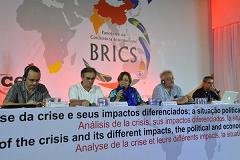
 Estimados compañeros, camaradas y amigos:
De parte de la clase obrera de Grecia y de su polo clasista en el movimiento, es decir del Frente Militante de todos los trabajadores (PAME) que agrupa centenas de organizaciones sindicales y miles de trabajadores, transmito un saludo militante, combativo, clasista e internacionalista a los trabajadores de Brasil y su organización CTB.
Es un honor de participar en su congreso y una oportunidad de fortalecer nuestras relaciones. Especialmente hoy que el capital, junto con todas sus organizaciones internacionales y los partidos políticos que de todas maneras apoyan su estrategia, han lanzado un ataque estratégico por todos los flancos contra los trabajadores y las capas populares, los campesinos pobres, los autónomos, las mujeres, la juventud.
El ataque está avanzando con especial barbaridad y se intensificará aún más. En Grecia la patronal, el gobierno de coalición entre liberales-socialdemócratas y una parte de centro izquierda, y la Troika (UE, Banco Europeo y FMI) impusieron un memorando de medidas de austeridad brutales. Mencionamos algunas de las consecuencias de dichas medidas:
Disparo de desempleo del 8% (2008) al 27% (2013). En las mujeres 45% – 50%. En los jóvenes más de 65%
1,5 millones de desempleados en un total de población activa de 4.5 millones (datos oficiales que ocultan un gran porcentaje de desempleo).
Miles de despidos en el sector público y privado, en la Educación, la Salud, la Administración Municipal etc.
Disparo del empleo flexible del 5% al 40%. Trabajo informal más de 40%
Trabajadores impagados por meses, la mayoría en el sector privado pero muchos en el sector público también
Promulgación de “libres despidos” (sin expresión de causa) y recorte hasta abolición de la indemnización.
Abolición de los convenios colectivos, sustituidos por contratos individuales.
Regulación del salario mínimo por ley del estado, con una reducción que llega de 756 euros a 500 euros mensuales.
Reducción del subsidio de paro de 450 a 350 euros, que sin embargo sólo muy pocos desempleados consiguen.
Recortes salariales y en pensiones de más de 20%-40%, mientras se prevé que habrá más reducciones.
Precios altos y disparo de los impuestos populares a través de tributos extraordinarios, incluso para los desempleados. La mayoría no puede pagar y está castigada con cortes de energía y agua, con pérdida de la vivienda por parte de los bancos y el Estado.
Abolición del domingo como día festivo y del empleo de horario fijo.
Las Cajas de Seguridad Social quedan vacías (debido al desempleo, los recortes salariales, la reducción de las contribuciones del empleador y de la reducción de la deuda que afectó sus fondos). Riesgo de suspensión de pago de pensiones y suspensión de prestaciones de salud.
Los hospitales y las escuelas públicas están degradadas y cierran. Educación y Salud se entregan completamente al capital privado. Gran parte de la población no tiene acceso a estos bienes.
La inmigración está creciendo a un ritmo frenético.
Miles de pequeñas y medianas empresas están cerrando, autónomos se convierten en desempleados y sin seguro.
Miles de campesinos están desarraigados a causa del costo alto de producción y precios bajos de sus productos, gracias a PAC (Política Agrícola Común de EU). La tierra está pasando en manos de las grandes empresas capitalistas.
El 40% de la población vive bajo el umbral de la pobreza. Incrementan los casos de subalimentación.
Al mismo tiempo aumentan los subsidios, las exenciones fiscales y los privilegios para el gran capital.
Se privatizan todos los bienes estatales (energía, agua, ferrocarril, puertos, aeropuertos, industria estatal, partes de la administración pública, salud, educación, etc.)
El Estado, a través de los pactos con la Troika, toma préstamos sólo para pagar los prestamistas y para afianzar los bancos, que a su vez prestarán el capital. El pueblo está cargado con los préstamos a través de los memorandos aludidos. Nada va para las necesidades populares. A pesar de la reducción de la deuda, ésta crece. Del 120% al 174% del PIB. (Producto Interior Bruto)
La crisis se profundiza y las estimaciones de todos los organismos predicen que la situación empeorará. Ante el miedo de estallidos populares se intensifican el terrorismo patronal y la represión estatal.
La política no está desligada de la economía. Se revela el verdadero rostro del sistema: la dictadura de los monopolios.
Durante los últimos años se han organizado luchas importantes en Grecia, encabezadas por PAME: huelgas, protestas, tomas, presión al sindicalismo pactista para convocar 30 huelgas. Destaca la huelga de los trabajadores de la Acería Griega para la no reducción de sus salarios que duró varios meses, con la contribución de PAME, que incitó solidaridad internacional. Dicha huelga es un gran legado para el movimiento obrero. Gran porcentaje de los trabajadores confía en PAME y apoya sus iniciativas. La legalidad burguesa se cuestionó con la consigna “ley es el derecho del obrero”. PAME cuestionó movimientos como “los indignados” o los “sin sindicatos”, que se desanimaron pronto, pero después de haber fortalecido el partido nazi “Amanecer Dorado”. Luchó contra la igualación entre comunismo y fascismo (la política oficial de la UE) ya que el anticomunismo prepara el terreno para un ataque universal hacia todos.
El carácter de la crisis
Aunque dichas luchas no han impedido la aplicación de las medidas, sin embargo hemos conseguido experiencia clasista. Las conciencias cambian entre estratos de trabajadores quienes han participado en la lucha por primera vez. Por tanto, es necesario tomar conciencia del carácter de la crisis, aumentar el número de trabajadores en los sindicatos, cambiar las correlaciones, confrontar la lógica de encomienda de la solución a “salvadores”, cambiar la idea de que las luchas son ineficaces, afrontar las exigencias reducidas de los trabajadores. Es por esa reorganización del movimiento que PAME está luchando. De todas maneras los cambios grandes nunca han sucedido de manera lineal, se necesita preparación y concentración de fuerzas para el enfrentamiento decisivo. La clase obrera es todopoderosa cuando está organizada y convencida por la necesidad de la lucha contra el capital y sus partidos.
La misma política se está aplicando en otros países, donde no tienen una deuda grande, en países con memorandos (Irlanda, Portugal) o sin memorandos (España, Italia), en países donde la crisis se agudiza (Francia, Gran Bretaña) y en aquellos que se han recuperado (Argentina, Brasil), en países dominantes (EE.UU, Alemania, Japón). Amigos y enemigos del sistema hablan ya de una crisis prolongada y sincronizada del capitalismo. El movimiento debe tener una imagen clara sobre las causas y el carácter de la crisis. No se trata sólo de una cuestión teórica, sino también de una cuestión práctica de importancia estratégica. Define quienes son nuestros enemigos y nuestros aliados, la orientación de la lucha del movimiento, la unidad de objetivos estratégicos directos. Protege el movimiento de las ilusiones- trampas, que ya las ha pagado. De ello depende su unidad y su eficacia. Si podrá responder a su misión histórica de liberar la clase obrera de la explotación. Por lo tanto, es necesario contestar a preguntas como:
¿PORQUÉ las crisis se repiten constantemente a pesar de los cambios de gobiernos (liberales, socialdemócratas) y las diferentes políticas de gestión?
¿PORQUÉ en varios países, con diferentes problemas estructurales, están sufriendo de la crisis?
¿PORQUÉ, a pesar de que las fuerzas productivas, la tecnología y el conocimiento humano se están desarrollando, a pesar de que el trabajo humano ha producido el aumento vertiginoso de riquezas, sin embargo la vida de cada vez más personas está empeorando?
¿Es posible salvar al sistema a través de otra gestión, dentro del propio sistema?
¿Existe camino para los trabajadores a fin de salvarse de esta barbarie?
Sobre estos asuntos, se confrontan dos líneas dentro del movimiento: La línea de la colaboración y de gestión del sistema, y la línea clasista para su derrocamiento.
En Grecia, la primera está representada por fuerzas sindicales del neoliberalismo, la socialdemocracia y los oportunistas de centro-izquierda, que han apoyado la Central Sindical GSEE, una Central Sindical de la sumisión social y del diálogo. A nivel internacional dicha línea está representada por la CES y la CSI.
La segunda, la línea clasista, está representada en Grecia por PAME y a nivel internacional por la FSM. Permítanos presentar algunas estimaciones basadas en la realidad:
El “oponente” del bloque socialista puede haber desaparecido, sin embargo las crisis capitalistas se agudizan. En lo único que todos los capitalistas coinciden es sobre la disminución del precio de la fuerza laboral. Pero la competencia feroz entre ellos multiplica las guerras a fin de garantizar sus mercados, sus fuentes energéticas, sus rutas de transporte. Con todo, insurrecciones populares se ven engañadas tratando de servir intereses ajenos al pueblo, intereses que convienen una u otra parte de la burguesía (p.e. Egipto) con la intervención internacional.
El ataque empezó con las reformas capitalistas en la década de los 70. La crisis ha convertido la imposición de dichas reformas más violenta. Las medidas aplicadas hoy en día están previstas en los tratados de Maastricht y de Lisboa de las décadas de los 90 (reducción de salarios, flexibilidad de relaciones laborales, derrumbamiento de la Seguridad Social, privatizaciones etc.). Dichos tratados fueron votados en Grecia por neoliberales (Nea Dimokratia), socialdemócratas (PASOK) y centro-izquierda (SIRIZA).
¿Cual es la posición de PAME sobre la crisis, conque define su estrategia y su táctica?
Se trata de una crisis cíclica del capitalismo a causa de la sobre acumulación de capital, como todas las crisis que han precedido. De esta manera se desata violentamente la contradicción principal, es decir que los bienes se producen con el trabajo de muchos mientras la apropiación de los resultados es privada, la propiedad es capitalista. Cada capitalista produce lo máximo posible a fin de desplazar sus rivales y predominar en el mercado. Rebaja los salarios de los trabajadores (que además son los consumidores de los productos) y despide. La sobre explotación de una parte de los trabajadores se convierte en requisito para el desempleo de otra parte de ellos. Es una locura social: la acumulación de riqueza de los capitalistas significa obligatoriamente acumulación de pobreza para el pueblo.
La anarquía de la producción sucede porque el único objetivo es la ganancia, la producción no puede ser planificada, las proporciones se echan abajo, no es posible prever la incapacidad de consumir todo lo que se produce. Mercancías quedan sin vender. Las ganancias disminuyen, la producción está interrumpida, los capitales no se invierten, quedan estancados, se acumulan hasta hallar oportunidades de inversiones rentables, las necesidades populares no se satisfacen. Por ejemplo, en Grecia hay 200.000 casas sin vender, mientras muchos corren el riesgo de perder sus viviendas a causa de sus deudas.
Los capitalistas griegos han sacado a Suiza 600 billones de euros, es decir más del doble de la deuda pública, al mismo tiempo que la producción se está tambaleando. Y no son los únicos. El mercado ha desbordado de ganancias en el período de desarrollo. La destrucción de fuerzas productivas es necesaria para el “nuevo arranque” de la economía bajo términos de rentabilidad. La primera fuerza a destrozar es la fuerza laboral. En esto están coordinados todos los capitalistas en todos los países.
Pero se destrozan otros sectores del capital también. Las empresas más pequeñas cierran. La producción se concentra en menos monopolios, más grandes. Capitales monetarios se están abaratando (baja de la bolsa, desvaloración de bonos del Estado y reducción de depósitos bancarios). La competencia entre sectores de la burguesía y diferentes Estados se está agudizando, sobre quién pagará más o menos la crisis. El desarrollo que seguirá será débil, corto, constituirá la preparación de una crisis nueva. Estará basado sobre la indigencia y el desempleo. Las inversiones privadas no pueden absorber millones de desempleados, sino sólo crear muy pocos puestos de trabajo precario y mal pagado. Las crisis están atadas al DNA del capitalismo, no se pueden evitar. Ocurren independientemente del deseo humano. No están afectadas por una buena o mala gestión gubernamental, por diferentes opciones de políticas dentro del marco del sistema. El ataque antipopular es calle única para el capitalismo. Habrá crisis mientras haya capitalismo, quien las genera y no tiene más que dar. Las crisis intensifican la podredumbre y la barbarie del capitalismo, pero a la vez producen reacciones, condiciones y fuerzas para su derrocamiento.
Para el PAME dicha análisis tiene importancia fundamental. Define la orientación general de la lucha del movimiento obrero, con la cual deben estar vinculadas las peleas diarias sobre problemas parciales, pequeños o grandes de los trabajadores, abre el camino para el derrocamiento de la “matriz” de las crisis. Si la causa es la propiedad privada en los medios de producción, los primeros que tienen interés en eliminarla son aquellos que no tienen propiedad privada, es decir la clase obrera. Es ella que puede encabezar una alianza social con otros estratos populares afectados (campesinos pobres que están desarraigados, autónomos que cierran sus tiendas, mujeres y jóvenes).
PAME tomó la iniciativa de aunar los polos radicales de dichos estratos, en una dirección antimonopólica-anti-imperialista, es decir anticapitalista, conectando la salida de la crisis a favor del pueblo y no de los monopolios, con la propiedad privada en los medios de producción y del poder político. Es decir, no sólo cuál partido está en el gobierno, pero cual clase tiene en sus manos la propiedad y por tanto el poder político.
Hay quienes sostienen que la crisis es una “crisis de deuda”, otros que es una crisis de capitalismo-casino, de capitalismo-pirata de los bancos. Echan la culpa sólo a la gestión neoliberal y no a la naturaleza del propio sistema, al cual exculpan. PAME considera que es una crisis típica de sobre acumulación.
La deuda es el resultado y no la causa de la crisis. La crisis de sobre acumulación ha contribuido al incremento de la deuda. El FMI sostiene que la deuda de los países desarrollados, del 75% del PIB que estaba antes de la crisis llegará al 120% en 2014. La deuda está debida al reforzamiento del capital por parte del Estado y no a la satisfacción de necesidades populares. La deuda es un elemento del desarrollo capitalista. ¿Cuál poder podrá negar el pago de esta deuda? No puede ser un poder burgués. Sólo el poder de la clase obrera puede.
Algunos sostienen que hay que reconocer la parte legal de la deuda. Sin embargo, ni los pueblos deben algo, ni existe mejor modo, más combativo, para negociar el alivio de la deuda. Así, reconociendo parte de la deuda, reconocen los contratos de préstamo del país con los prestamistas y la condición de que los préstamos deben entregarse totalmente para el apoyo de los bancos (que deben salvarse a toda costa para financiar la recuperación capitalista) y que dichos préstamos deben pagarse por el pueblo. Es decir, que otro gobierno imponga nuevos memorandos. Dicha postura no puede enfrentar el desempleo y la indigencia, que son el trampolín para la recuperación capitalista.
La opinión de que un grupo de bancos estatales puede desencadenar un desarrollo controlado de las empresas saludables, ignora el hecho de que estas empresas trabajan para su rentabilidad, bajo las condiciones que les imponen los prestamistas. La función de empresas saludables está basada en las ganancias con el robo del ingreso de los trabajadores.
Sólo PAME niega reconocer la deuda. Lucha por la cancelación unilateral de toda la deuda, que libera las fuerzas productivas del país a favor de las necesidades populares.
Sólo PAME lucha por la salida de la UE. Es un factor que agudiza la crisis, una “alianza de lobos” que coordina los monopolios contra los trabajadores, sea con gobiernos neoliberales o socialdemócratas. La participación en la UE no es una selección nacional si no una selección clasista del capital, para mejorar su presencia a nivel internacional. Las opiniones de centro-izquierda de que eso puede cambiar son una ilusión y han llevado estas fuerzas a apoyar selecciones bárbaras e incorporar el mundo obrero en su política, lo que ahora está pagando.
Por otro lado, la cancelación unilateral de la deuda y la salida de la UE no pueden por si solas garantizar la prosperidad popular. Existen sectores del capital que pueden apoyar dichas posturas. Expresan intereses empresariales (sobre todo exportadores) que les conviene el regreso a la unidad monetaria nacional, la salida de la UE y de la zona del euro, están beneficiados de la fluctuación de la moneda nacional. Consideran que, al no pagar la deuda a los prestamistas, los fondos nacionales pueden disponerse a fin de apoyarlos. DichapolíticapreexistíaenGreciaymuchospaíses. Noevitalacrisis. Está basando “el desarrollo” en préstamos provenientes de bancos y el Estado, que de nuevo pagarán los trabajadores. Los salarios reducidos y el desempleo son requisitos para esta política también.
Estas posturas a nivel político se expresan a través de consignas sobre la “unión patriótica” en contra de los prestamistas y la “ocupación” que han impuesto a los países más pobres. A nivel internacional están hablando de cooperación entre los países del sur europeo (ignorando las contradicciones que tienen entre ellos), una nueva negociación de la deuda, bajo el liderazgo de gobiernos burgueses quienes están al servicio de la economía libre, que nos ha llevado a la situación actual.
En Grecia, coinciden en esta dirección fuerzas políticas heterogéneas teniendo como base común la aceptación de la primacía de los monopolios, el respeto a su poder económico y político. Empezamos con la banda nazi-criminal del Amanecer Dorado (que a pesar de sus expresiones anti -sistémicas funciona como falange del sistema jugando el papel de represión del movimiento y de apoyo a la patronal), pasamos por partes de las formaciones neoliberales y socialdemócratas para llegar hasta la centro-izquierda de SIRIZA. Dichas fuerzas están apoyadas por diferentes partes del capital y de la prensa burguesa, que hasta ahora estaban a favor de la imposición de los memorandos. De esta manera se está creando una base para la alianza (véase sumisión) de partes del movimiento con partes del capital, a favor exclusivamente de este último.
He aquí el por qué analizar el carácter de la crisis, que define la estrategia y las alianzas sociales. La crisis no es nacional, sino clasista. De ella sale ganando el capital, perdiendo los trabajadores. Si el movimiento obrero lucha bajo las banderas de parte del capital esto significa retroceso estratégico de los trabajadores, desarrollo con desempleo e indigencia, abierto al riesgo de nuevas crisis.
Las opiniones aludidas expresan una realidad:
El capital y sus fuerzas políticas, destrozan las fuerzas productivas y empobrecen al pueblo, perdiendo hasta sus propios aliados dentro del pueblo (trabajadores muy bien pagados en el sector público etc.). Conociendo que no volveremos al nivel de bienestar de antes de la crisis y que la situación va empeorar, temen brotes populares que pueden disputar el núcleo de su poder. Están obligados a reformar el sistema político con el único fin de absorber e integrar al sistema las reacciones populares, de no poner en peligro el poder de los monopolios. Es un esfuerzo que se está desarrollando tanto a nivel sindical como a nivel político.
En Grecia se han desprestigiado las fuerzas sindicales (hasta ahora dominantes), de los neoliberales y socialdemócratas. Antes y después de la crisis, a través del “diálogo social”, se retractaron negociando sobre lo que pierdan y no lo que ganen los empleados. No se equivocaron, se aliaron a los empleadores y el Estado para la reducción de los salarios, la abolición de los convenios colectivos. Contribuyeron a la redistribución del ingreso a expensas de los trabajadores, cultivaron una mentalidad de retirada, del “mal menor”, del esfuerzo nacional para superar la crisis, de la integración de las víctimas en la lógica de los agresores.
Una gran parte de sus fuerzas se incorporó de manera organizada en las fuerzas sindicales de centro – izquierda (SYRIZA), acomodando allí el arsenal ideológico y político del compromiso de clase. Las fuerzas sindicales de la centro- izquierda y su actor político (SYRIZA) contribuyen a la reforma de la escena sindical y política, sin poder evitar las contradicciones como las que veremos a continuación:
Tienen como consigna única de los sindicatos el derrocamiento del gobierno actual para ocultar sus concesiones, para ocultar que en los lugares de trabajo se aplican memorandos contra los trabajadores. Firman convenios colectivos con recortes de salarios y de derechos.
Aceptan colaboraciones entre el sector público y privado que siempre benefician al segundo y abren la puerta a la privatización. Hablan sobre el fortalecimiento de los capitalistas “saludables” como si hubiera capitalistas que ganan sin explotación de los trabajadores, etc.
Promocionan teorías keynesianas anticuadas de regulación de los mercados. Pero el mercado significa ganancia, competencia. No puede ser a favor del pueblo. No pueden coexistir los beneficios empresariales y la prosperidad popular.
Esta política no disputa la lógica dominante del sistema, contemplando sus prioridades (continuación de los contratos de préstamos con la Troika para fortalecer los bancos, permanecer dentro de la UE, etc.) Llama al pueblo a derrocar el gobierno actual, es decir, sustituir el personal político del sistema sin cambiar la esencia de la política.
Esta línea manipula las reacciones populares cultivando la idea de que el país está bajo ocupación por los prestamistas y sobre todo Alemania. Exculpa el capital que creó la crisis y se está beneficiando de ella y prepara el terreno para otra mezcla de gestión de la crisis, que se expresa sobre todo por el gobierno de los EE.UU. y Obama. Representa diferentes partes del capital y de las fuerzas internacionales que tienen miras a un polo del imperialismo mundial, los EE.UU., en yuxtaposición al polo alemán y de la U.E.. Desorienta el pueblo y rescata al sistema y sus crisis.
Es muy representativo el hecho de que dicha posición empezó a defenderse por los grupos importantes de la prensa burguesa tanto en Grecia, como en los EE.UU. (véase el artículo de apoyo a SYRIZA en New York Times) que estaban patrocinando los memorandos. Esta posición está sostenida por la Asociación de los Industriales también, como una alternativa para absorber las reacciones populares, las cuales no deben llegar a cuestionar el poder de los monopolios. Todo esto compagina con las grandes concesiones de la centro-izquierda en cuanto a sus compromisos preelectorales, su aproximación a la política de la austeridad, del desempleo y del apoyo a los empresarios y a los memorandos.
Esta experiencia no es sólo griega, es europea también. La socialdemocracia, al acercarse a los neoliberales pierde la posibilidad de manipular al pueblo e integrarlo al sistema. Se sustituye por la centro-izquierda en el papel del salvador del sistema, quien absorbe la reacción popular sin cambiar de política. La experiencia de la participación de fuerzas de centro-izquierda en los gobiernos de la UE demuestra que no han amortizado la crisis (aparte no podrían) sino que se han convertido en parte de ella. Impusieron opciones antilaborales del capital a los trabajadores, participaron en intervenciones imperialistas.
Por último, una cuestión estratégica, con respecto al diálogo político:
No existe una mezcla de políticas en el capitalismo que detenga las crisis, que sirva tanto a los intereses de los explotadores como a los de los explotados, de los capitalistas y de los trabajadores. Cualquier intento similar en el pasado se demostró beneficioso para los primeros y desfavorable para los últimos.
Las luchas de PAME, para defender los derechos vitales de los trabajadores (contra los despidos y recortes salariales, contra el cierre de empresas, los impuestos impopulares, la privatización, la abolición de los derechos a la salud y la educación) tropiezan en el hecho de que los capitalistas no pueden superar su propia crisis sin estas medidas. Por lo tanto, incluso victorias pequeñas y parciales del movimiento se están convirtiendo cada vez más difíciles. Para lograrlas hay que romper con el alma de la política del capital, y conducir a derrocamientos, bajo una dirección antimonopólica, anticapitalista.
Por fin, para servir el objetivo inmediato y táctico se requiere conflicto radical con el sistema.
Para el PAME, la negación de las fuerzas radicales a participar en gobiernos de administración y no de derrocamiento es un legado de importancia estratégica para el movimiento. El PAME en lugar de coaliciones con fuerzas de reforma y mantenimiento del sistema elige:
La unidad clasista de los trabajadores, basada en sus características sociales y de clase y no en su voto en las últimas elecciones, en dirección a enfrentarse con la patronal y con su dominio en la economía y la política, enfrentarse con la base de su soberanía, con la propiedad privada en los medios de la producción.
Elige la alianza social, de todos los estratos populares que gimen de la crisis (agricultores pobres, autónomos, mujeres, jóvenes). Una alianza organizada a nivel ramal y regional, con comités populares en los barrios de las ciudades y los pueblos.
El PAME no requiere un acuerdo con el total de su perspectiva política, pero pone como criterio de participación en la alianza, tres condiciones básicas, directas y combinadas:
Cancelación unilateral de la deuda.
Salida de la U.E.
Socialización de medios fundamentales de producción.
Es la única manera de proteger a los trabajadores de los efectos de la crisis, y las trampas de gestión de la crisis contra ellos mismos. Es la única manera que abre el camino para una economía planificada al servicio del pueblo, bajo el control de los trabajadores, con el poder en las manos del pueblo.
Gracias.
Dear comrades, co-fighters and friends,
On behalf of the working class of Greece and it’s class oriented pole, ALL WORKERS MILITANT FRONT (PAME), which gathers hundreds of syndicates with thousands of workers, I bring to Brazilian workers and your organization militant and solidarity greetings.
It is an honour to participate to your congress and it’s an opportunity to strengthen our relationship.
Especially today that the capital, all it’s international institutions, the political parties that support it’s strategy one way or another, have launched a profound strategic attack against workers and other people strata like poor farmers, self employing, women and youth.
The attack proceeds savagely and it will escalate even more. In Greece, employers, coalition government (liberals, socialdemocrats, a part of centre – left) and Troika (formed by European Union, Central European Bank and International Monetary Fund) have imposed a memorandum of anti – popular barbaric policy.
Here are some of it’s consequences :
Launch of unemployment from 8% (2008) to 27% (2013). In women’s population is about 45%-50%. For young people is over 65%. One and a half million people unemployed in 4,5 million of active population according to official data that are hiding a big percentage of unemployment.
Thousands of dismissals in private and public sector of economy, factories, commerce, education, Health system, municipalities e.t.c.
Launch of flexible employment from 5% to 40%. Non insured work over 40%.
The majority of workers in private an public sector are unpaid for many months.
Release of dismissals and reduction (until abolition) of the compensation .
Abolition of collective agreements and replacement of them by individual agreements.
The state decides about minimum wage and it was reduced from 756 to less than 500 Euros.
Reduction of unemployment benefit from 450 to 350 Euros and is given to a little percentage of unemployed
General reduction of wages over 20% – 40% and there will be a new round of reduction. .
Expensiveness in market , launch of taxes for people even for unemployed. Most of people cannot pay taxes and are punished with power cut, water cut and loss of their house because of debts to state and banks.
Abolition of Sunday holiday and of stable working schedule.
Poor social security organizations (because of unemployment, reduction of wages and of the employers’ contribution that are not paid, haircut off of their money stocks).
Public hospitals and schools are debased and shut down. Many people have no access to these goods.
Immigration is growing enormously.
Thousands of minor and medium companies are shutting down, self – employing are unemployed and insecured.
Poor farmers are uprooted because of high production cost and low market prices, because of the common agricultural policy of E.U. Agricultural land passes to big capitalistic companies.
In the same time subsidies, tax exemption and benefits are increased for big capital.
All state’s property is privatized (energy, water supply, railway, ports, airports, state’s factories, parts of municipalities, health system, education, social welfare).
The state, with lending agreements with Troika, is lented in order only to pay the lenders and support banks which will lend to the capital. The loans are charged to people by the memorandum. Nothing goes for people’s needs.
Despite the haircut, public debt is growing. From 120% of the national product escalated to 174% of it.
Employers’ terror and state’s suppression is intensified because of the fear for social outbreak. Politics is not separate from economy. Real person of capitalistic system is revealed : dictatorship of monopolies.
In the past years, there were important class fights in Greece, organized by PAME, strikes, demonstrations, occupations of public buildings, with pressure to the governmental syndicalism to declare 30 general strikes.
Special place belongs to the 8 months strike in Greek Steel Mill against reduction of wages, with thecrucial contribution of PAME. It roused a global solidarity movement. It’s a heritage for trade union movement.
Big percentage of workers sees with confidence PAME and supports his initiatives. Bourgeois legality was disputed with the slogan “law is the right of worker”.
PAME had a critical attitude towards movements like “indignants” “against the trade unions” which were deflated after it strengthened the Nazists of GOLDEN DAWN. PAME fought against the equation od communism with fascism (the official policy of E.U.). Anti-communism prepares the ground for total attack against all workers. This struggle did not prevent barbaric policy but class struggle experience was acquired by many workers that entered in the battle for the first time, conscience of many workers is changing.
It is necessary that workers realize the character of crisis, come massively into trade unions, change of correlations, confront the logic of assigning peoples’ matters to “saviors’ from above, confront the reduction of peoples’ demands. PAME struggles for this re – orientation of trade union movement.
Great changes don’t come in successive order. Class preparation and gathering forces for the moment of crucial class conflict, is necessary
Working class is powerful when it is organized and determined for struggle against capitalism and it’ s political parties.
THE CHARACTER OF CRICIS
Same policy is also applied in countries that do not have big debt, in countries with memorandum (Ireland, Portugal) or without memorandum (Spain, Italy),in countries that crisis is escalated (France, Great Britain), in those that passed in recovery (Argentina, Brazil), in predominant countries (USA, Germany, Japan).
Friends or enemies of system, speak for longtime, extended and synchronised crisis of capitalism. . The working class movement should have clean opinion for the reasons and the character of crisis. Is not simply a theoretical but practical question of strategic importance. It determines about enemies and allies, the direction of the struggle of movement, the unity between strategic and tactical objectives. It protects the movement from delusions – traps that it paid for them. It determines about effectiveness and if it corresponds in the historical mission to liberate working class from the exploitation.
Some questions have to be answered such as :
WHY crises are repeated regularly while governments and mix of it’s management are changing?
WHY countries with different structural problems go into crisis?
WHY, the life of more and more people is getting worse while productive forces, technology and human knowledge are developed and the work of people have increased wealth enormously?
Can the system be saved from crises with other mix of management, in the frames of this system?
Is there a way for workers to be saved from the barbarism of crisis?
On these questions two policies are conflicting in the movement : The policy of incorporation and the management of crisis in the frame of this system and the class oriented policy of it’ s overthrow. In Greece, the first is expressed by trade-union forces of liberalism, socialdemocrats and opportunists of centre-left, that supported the policy of social submission and social dialogue of General Confederation of Greek Workers (GSEE) . In international level it is expressed by the ETUC and the ITUC . The second, class oriented policy, is expressed in Greece by PAME and internationally by WFTU (World Federation of Trade Unions).
Please, allow us to do certain thoughts that are based on reality:
The “rival awe of” Socialist countries is absent but the capitalistic crises are getting deeper. The only matter that capitalists agree among them is the reduction of price of working force. However the wild competition between them, multiplies the wars for insuring new markets, energy sources, routs for transportation. Even popular uprisings are trapped in the service of interests foreign to the people, of one or another part of bourgeois class with international interventions (like Egypt etc).
The attack began with the capitalistic restructuring since ’70 decade. The crisis made restructuring more violent. The policies that are applied today were predetermined by European Union agreements of Maastricht and Lisbon in the’ 90 decade (reduction of wages, imposition of flexible work, demolition of social insurance, privatisations etc). In Greece these agreements were supported by neoliberals (ND), socialdemocrats (PASOK) and centre-left (SYRIZA).
Which is the opinion of PAME for the crisis that determines it’ s strategy and tactic?
It is a cyclical capitalistic crisis of over accumulation of merchandises and capital, as other that preceded. Dominating social contradiction bursts out violently : social production v. private appropriation. Products are produced by many people but its’ ownership is private, property of means of production is capitalistic
Here is the crisis mechanism :
Each capitalist produces as much as he can in order to displace competitors and dominate in competition. He reduces workers’ wages (that are also consumers of his products), he dismisses workers. The overexploitation of one part of workers becomes prerequisite of unemployment of the other part.
It is a social insanity.
Accumulation of wealth for the capitalists means obligatorily accumulation of poverty for the population. There is an anarchy, a lawlessness in production because it’ s only criterion is the profit, it cannot be scheduled, the proportions are overturned, the weakness of consumption of products cannot be forecasted. Merchandises remain unsold. Production stops because profit margin is lowered , capitals are not invested, they are accumulated until they find occasions of profitable investments. Needs of people are not satisfied.
For example, in Greece there are 200.000 unsold houses while many people are in danger of losing their house because of debts. Greeks capitalists removed in Switzerland 600 billions of Euros that is to say above double of the public debt, while material production is collapsing. And they are not only ones.
The markets exploded from profits during the period of growth. Destruction of productive forces is essential for restarting economy with terms of profitability. First force that is destroyed is the working force. All capitalists, all states, agree for this matter, are coordinated on this goal.
Parts of capital are being destroyed. Smaller companies close. Production is assembled in bigger monopolies. Monetary capital is undervalued (fall of stock markets, haircut of bonds and deposits). Competition between states and parts of bourgeois class about the matter which of them will pay more or less for the crisis, is intensified.
The economic growth that will follow crisis will be anaemic, for a short time, a preparation of new crisis. It will be based on impoverishment and unemployment. Private investments cannot absorb millions unemployed, they can only create very few, unstable and low – wage jobs.
Crises are in the DNA of capitalism, it cannot avoid them. They happen independently from the human will. They are not influenced by a good or bad governing, from different mixes of policy in the frames of system. The anti-popular attack is the only way for the system to overcome crises . Crises will exist as long as capitalism exists. This system cannot give anything else but unemployment, impoverishment and wars. It’s decay and barbarism, gives birth to social reactions, social powers and preconditions for overthrowing it.
For PAME, this analysis has fundamental importance . It determines general direction of struggle of working class movement with which, struggle for daily small or big problems of workers should be connected. It opens the way for overthrowing the generator of crises. As long as private property of the means of production is the main cause of crisis, the first who have interest from this overthrowing is working class that haw no private property of them. This class can lead a social alliance with other people strata that are affected from crisis (poor farmers that are uprooted, self-employing that close their shops, women, youth).
PAME took the initiative to unite radical class organizations of them, on a cohesive antimonopoly – anti- imperialistic, that is to say anti- capitalistic direction, connecting the question of exit out of crisis (in profit of people and not the monopolies) with the question of property of means of production and the question of state domination. That is to say, not only which political party is in government but which social class has in it’ s hands the property therefore the political power.
Certain aspects claim that crisis is “crisis of debt”, others that it’ s a crisis of casino – capitalism”, a pirate capitalism of banks”. They attribute the responsibility for crisis only to neo – liberal management and not to the nature of system itself. So, they acquit the system, the generator of crisis.
Public debt is the result, not the cause of crisis. The crisis of over – accumulation contributed to the expansion of debt. I.M.F reports that the debt of developed countries from 75% of GNP (Gross National Product) before crisis will reach the 120% of GNP in 2014. The debt is due to the economic supprort of states to capitalists not the fulfillment of popular needs. This support is essential for capitalistic growth.
Which state power can deny to pay this debt? A bourgeois government cannot. Only the working class state power, can.
Certain aspects support the recognition only of the “legal” part of debt. However, people owe nothing at all. On the other hand, a better, “fighting” negotiation for decreasing debt cannot exist. But even lenders do haircut of debt simultaneously with cut of wages and rights of people . These aspects recognize :
a) the lending agreements of Greece with the lenders (Troika) and its’ conditions that the loans will go entirely to support only the banks (that should be saved at any cost in order to finance the capitalistic recovery) and b) that the loans will be paid by people. That is to say imposition of new memorandum from another “progressive” government. This policy cannot confront unemployment and impoverishment, which are the springboard of capitalistic recovery.
The aspect that claims that a group of state owned banks can motivate controlled growth of healthy businesses, overlooks the fact that all banks work for profits, with terms imposed by the lenders, for the benefit of capitalists . Even “healthy” business is based on profitability and the theft of working class income.
Only PAME does not recognize any debt because it was not created by people. It fights for the unilateral deletion of entire debt. This will release productive possibilities of country, in the service of popular needs
Only PAME fights for exit of the country out of the European Union. It is factor of escalation of crisis, it is a wolf–nest – coordinator of monopolies against workers, either with neoliberals or socialdemocratic governments. The participation in E.U is not a national but class choice of capital in order to upgrade it’s international presence. The centre-left aspect that it can be changed is a delusion, led centre – left parties to support anti – popular policy, it incorporates working class in E.U. policy and make workers pay for it.
The unilateral deletion of debt and the exit from the European Union cannot itself ensure popular prosperity. Groups of capitalists may support these goals.
They express business interests (mainly exporting companies) that have interest from return to national currency, and the exit from the EU. or Eurozone, because they will benefit from the fluctuation of national currency. They consider that not paying debt to lenders, will turn national resources for their support.
This policy preexisted in Greece and a lot of countries. It cannot avoid crisis. It supports “growth” with state and bank loans that will be paid by workers. Low wages, unemployment are preconditions for this policy.
On political level, these aspects are expressed by the slogan for “patriotic unity” against lenders and “occupation” that they imposed on poorer countries saying that the main problem is “national independence”. On international level they speak about collaboration of countries of European South, (overlooking oppositions between them), new negotiation of debts, under the leadership of bourgeois governments that serve free economy that brought us in the current situation.
In Greece, various political forces of different origin, agree in this direction with common base, the acceptance of primacy of monopolies, the respect of their economic and political domination. These forces are the nazist – criminal gang of Golden Dawn (which despite anti systemic phraseology it acts as the Fifth phalanx of system in role of repression of the working class movement and support of employers), parts of neoliberal and socialdemocratic parties and the centre-left parties. They are supported by groups of capitalists and the bourgeois press that up to now supported the imposition of memoranda. An alliance between parts of the movement and parts of capital is being created for exclusive profit of the second.
That’s why analysis of the character of crisis determines the strategy and social alliances. It is not a national but a class crisis. Capital will benefit from it, workers will lose. If working class movement acts under the flags of parts of capitalists this will mean strategic retreat of workers, economic growth with unemployment and impoverishment, constant danger of new crises.
All these aspects express a reality: Capital and it’s political forces, under the destruction of productive forces and the impoverishment of people (even of their social allies in people strata up to now), with the knowledge that there will be no return to standard of living before crisis and that the situation will get worse, they fear popular outbreaks that can put in danger the core of their domination.
That’s why they are forced to reform the political system with unique aim to absorb and incorporate the popular reactions, so that the domination of monopolies will not be put in danger. This effort develops on the trade-union and political level.
In Greece, there is disdain of the trade union forces of liberals and socialdemocrats that were sovereign up to now. Before and after the crisis, they retreated from workers’ interests through “social dialogue” not for what workers will gain but for what they will lose. This was not a mistake but conscious collaboration with the employers and the state for the reduction of wage, the abolition of collective agreements. They contributed to the redistribution of income in harm of workers, they cultivated the logic of retreat, of “less harm”, and the logic of “national effort” for getting out of crisis, they incorporated victims in the logic of those who sacrifice them.
A big part of these forces moved in the trade-union forces of centre left, with all their ideological and political armaments of class compromise. The trade-union forces of centre left and their supporting political party (SYRIZA) contribute to the reformation of trade-union and political setting, with double expression:
They make unique slogan of trade unions the overthrow of today’s government and the election of their government. They cover up their retreat from peoples’ interests, they support E.U, lending agreement with lenders and (unavoidably) it’s consequence, the memorandum, they implement memorandum.
For example, they sign collective agreements with reductions of wage and rights. They accept cooperation between public and private sector that profits only the second one and is always a door for privatizations. They support “healthy” capitalists>. But there are no capitalists who earn profits without exploitation, that are willing to pay the debt. Even “healthy” capitalists ask for sacrifices from workers for national economy
They promote outdated Keynsian theories for regulation of markets. However market means profit, competition, anarchy. It cannot function for people. Business profits and popular prosperity cannot coexist.
This policy does not confront system’s logic, it recognizes it’s basic priorities. It calls only for overthrowing government, just to replace political personnel of the system without changes of the essence of policy.
This policy manipulates popular reactions with the theory that the problem is just a problem of bad negotiations and retreat of government to the lenders, a problem of occupation of the country from the lenders and especially from Germany. It acquits the capital that created and it is profited by the crisis. It opens the way for another mix of management of crisis in the frame of the system, that is mainly expressed by the government of USA and Obama. It expresses different parts of capital and international forces that prefer one pole of imperialism, USA, versus the German and E.U pole. It disorientates people, rescues the system, does not confront crises.
It is characteristic that this aspect began to be supported by conservative press in Greece but also in the USA that they supported the memoranda (article in NEW YORK TIMES that centre – left SYRIZA is the only solution for Greece). It is accepted by the Greek Industrialists’ Federation as alternative solution for absorption of popular reactions that should not put in question the dominance of monopolies . All these are combined with it’s retreat from pre-election engagements and it’s approach to the systemic policy.
This experience is not only Greek. It is European.
Social democracy lost it’ s power to manipulate people by approaching neo liberal policy. It is replaced by the centre-left in the role of rescue of system with the absorption of popular reactions without change of policy.
The experience of participation of centre-left forces in governments in the E.U. shows that they did not prevent from crisis, it became a part of it. It imposed anti-popular policy, it participated in imperialistic wars.
Finally, a question of strategic importance that concerns the political dialogue.
Is it for the profit of workers, that a radical, class – oriented political force, with direction to overthrow the system, to participate in governments of collaboration with other forces that declare just another mix of management of crisis, in the frame of system, supporting however it’s basic principles?
We believe that it would be a retreat and a defeat of strategic importance for the movement. With the compromises for the support of such a government that does not dispute the system, this political power not only would become itself a factor of crisis and of neutralization and incorporation of radical working masses and disorientation that crises can be prevented in the frame of the system. It would come in conflict with people, it would impose anti – popular policy. Working class would lose it’s self contained class oriented action for it’ s interests, it would lose it’ s class organization. It would work for the interests of her exploiters
There is no mix of policy in the frame of capitalism that would stop the crises, that would serve simultaneously the interests of capitalists and workers. Every similar effort in the past was proved for the profit of the first and for the harm of the second.
It’s characteristic that struggle of PAME, for the defence of vital rights of workers (against dismissals and reductions of wages, the results of the closure of companies, the anti popular taxes, the privatisations, the abolition of rights in health – education) stumble on the fact that capitalism cannot overcome crisis, without this policy. It is obligatory for it. Even the small victories of the movement become very difficult. These victories can only be achieved in conflict with the soul of policy of capital, only if they lead to overthrow, in antimonopoly – anti capitalistic direction. We do not wait until this overthrow but we want to open the way for it with every minor or major fight of the working class.
Finally the support of immediate tactical objectives requires radical conflict with the system.
For PAME, the refusal of participation of radical forces in governments which manage crisis in the frame of the system is a heritage of strategic importance for the movement.
PAME, instead of coalitions with forces of reformation – maintenance of system, it selects:
The class unity of workers, based on social characteristics and not on the vote of someone in last elections. In the direction of conflict with employers , with their dominance on economy and policy, and the base of their dominance, the private property of the means of production.
PAME selects social alliance, of all people strata that are harmed from crisis. With organisation of this alliance at every sector of production but also on local level, with people’s committees in the neighborhoods of cities and villages.
PAME does not require agreement with entire it’s political attitude but puts as criterion of participation in this alliance, three basic, immediate and combined objectives:
Unilateral deletion of debt. – Exit from the EU. – Socialization of basic means of production.
It is the only way to protect workers from the consequences of crisis, the traps of managing crisis to their harm. It is the only policy that opens the way for scheduled economy in the service of people, under workers’ control, with the state power in the hands of working class and people.
Thank you.
Αγαπητοί σύντροφοι, συναγωνιστές και φίλοι,
Από πλευράς της εργατικής τάξης της Ελλάδας και του ταξικού πόλου στο κίνημα της, του ΠΑΝΕΡΓΑΤΙΚΟΥ ΑΓΩΝΙΣΤΙΚΟΥ ΜΕΤΩΠΟΥ που συσπειρώνει εκατοντάδες συνδικαλιστικές οργανώσεις και εκατοντάδες χιλιάδες εργαζόμενους, μεταφέρω ταξικό, αγωνιστικό, διεθνιστικό χαιρετισμό στους εργαζόμενους της Βραζιλίας και στην οργάνωση σας .
Είναι τιμή μας να συμμετάσχουμε στο συνέδριο σας και ευκαιρία να δυναμώσουμε τους δεσμούς μας.
Ιδιαίτερα σήμερα που το κεφάλαιο, όλοι οι διεθνείς οργανισμοί του, τα πολιτικά κόμματα που έτσι ή αλλιώς στηρίζουν τη στρατηγική του, εξαπέλυσαν ολομέτωπη, στρατηγική επίθεση ενάντια στους εργαζόμενους τα λαϊκά στρώματα, φτωχούς αγρότες, αυτοαπασχολούμενους, τις γυναίκες και τη νεολαία.
Η επίθεση εξελίσσεται με ιδιαίτερη βαρβαρότητα, θα κλιμακωθεί περισσότερο. Στην Ελλάδα, η εργοδοσία, η κυβέρνηση φιλελεύθερων – σοσιαλδημοκρατών και ενός τμήματος της κεντροαριστεράς, και η Τρόϊκα (Ευρωπαϊκή Ένωση, Ευρωπαϊκή Τράπεζα και Διεθνές Νομισματικό Ταμείο) η Ευρωπαϊκή Ένωση) επέβαλαν μνημόνιο βάρβαρων αντιλαϊκών μέτρων.
Αναφέρουμε κάποιες από τις επιπτώσεις του :
Εκτόξευση ανεργίας από 8% (2008) σε 27% (2013). Στις γυναίκες 45%-50%. Στους νέους πάνω από 65%.
1,5 εκατ. άνεργοι σε σύνολο ενεργού πληθυσμού 4,5 εκατ. (Επίσημα στοιχεία που αποκρύπτουν μεγάλο ποσοστό της ανεργίας).
Χιλιάδες απολύσεις στον ιδιωτικό και στον δημόσιο τομέα, στη Παιδεία, Υγεία, Τοπική Διοίκηση κ.λ.π.
Εκτόξευση της ελαστικής απασχόλησης από το 5% στο 40%. Ανασφάλιστη εργασία πάνω από 40%
Απλήρωτοι για μήνες, η πλειοψηφία εργαζόμενων ιδιωτικού τομέα και σημαντικό μέρος στο δημόσιο.
Απελευθέρωση απολύσεων και «μείωση» έως κατάργηση της αποζημίωσης τους.
Κατάργηση Συλλογικών Συμβάσεων Εργασίας και αντικατάσταση τους από ατομικές συμβάσεις.
Καθορισμός κατώτερου μισθού από το κράτος με μείωση από 756 κάτω από 500 ευρώ.
Μείωση επιδόματος ανεργίας από 450 σε 350 ευρώ, που το παίρνει μικρός αριθμός ανέργων.
Μείωση μισθών και συντάξεων πάνω από 20%-40% ενώ προγραμματίζεται νέος γύρος .
Ακρίβεια και εκτόξευση της λαϊκής φορολογίας με έκτακτους φόρους, ακόμα και για άνεργους. Οι περισσότεροι δεν μπορούν να πληρώσουν και τιμωρούνται με διακοπή ρεύματος, ύδρευσης, απώλεια της στέγης τους από το Δημόσιο και τις τράπεζες.
Κατάργηση της Κυριακάτικης αργίας και του σταθερού χρόνου εργασίας.
Άδεια ασφαλιστικά ταμεία (λόγω ανεργίας, μείωσης μισθών και εργοδοτικών εισφορών και μη πληρωμής τους, «κουρέματος» αποθεματικών). Άμεσος κίνδυνος μη πληρωμής συντάξεων και παροχών υγείας.
Δημόσια νοσοκομεία και σχολεία υποβαθμίζονται και κλείνουν. Παιδεία και υγεία παραδίνονται ολοκληρωτικά στο ιδιωτικό κεφάλαιο. Μεγάλο τμήμα πληθυσμού δεν έχει πρόσβαση σ’ αυτά τα αγαθά.
Η μετανάστευση διογκώνεται με αλματώδεις ρυθμούς.
Χιλιάδες μικρές – μεσαίες επιχειρήσεις κλείνουν, αυτοαπασχολούμενοι μένουν άνεργοι και ανασφάλιστοι.
Αγρότες ξεριζώνονται λόγω υψηλού κόστους και χαμηλών τιμών ελέω Κ.Α.Π. Η γη περνάει σε μεγάλες καπιταλιστικές εκμεταλλεύσεις.
Το 40% του πληθυσμού ζει κάτω από το όριο φτώχειας. Πολλαπλασιάζονται φαινόμενα υποσιτισμού.
Την ίδια ώρα αυξάνονται επιδοτήσεις, φοροαπαλλαγές και προνόμια στο μεγάλο κεφάλαιο.
Ιδιωτικοποιείται όλη η κρατική περιουσία (ενέργεια, ύδρευση, σιδηρόδρομοι, λιμάνια, αεροδρόμια, κρατικές βιομηχανίες, τμήματα της Τοπικής Διοίκησης, υγεία, παιδεία, πρόνοια κ.λ.π.).
Το κράτος, με δανειακές συμβάσεις με τη Τρόϊκα, δανείζεται αποκλειστικά για να πληρώσει τους δανειστές και να ενισχύσει τις τράπεζες που με τη σειρά τους θα δανείσουν στο κεφάλαιο.
Τα δάνεια φορτώνεται ο λαός με μνημόνια μέτρων όπως παραπάνω. Τίποτα δεν πάει για λαϊκές ανάγκες.
Παρά το κούρεμα του δημόσιου χρέους, αυτό διογκώνεται. Από το 120% έφτασε το 174% του ΑΕΠ.
Η κρίση βαθαίνει και οι εκτιμήσεις όλων των οργανισμών προβλέπουν ότι η κατάσταση θα χειροτερέψει.
Μπροστά στο φόβο λαϊκών ξεσπασμάτων εντείνεται η εργοδοτική τρομοκρατία και η κρατική καταστολή. Η πολιτική δεν είναι ξεκομμένη από την οικονομία : Αποκαλύπτεται το πραγματικό του πρόσωπο του συστήματος : δικτατορία των μονοπωλίων.
Τα τελευταία χρόνια, έγιναν σημαντικοί αγώνες στην Ελλάδα, με οργανωτή το ΠΑΜΕ, με απεργίες, συλλαλητήρια, καταλήψεις, με πίεση στον εργοδοτικό συνδικαλισμό να κηρύξει 30 γενικές απεργίες.
Ξεχωριστή θέση έχει η πολύμηνη απεργία στην Ελληνική Χαλυβουργία με τη συμβολή του ΠΑΜΕ για να μη μειωθούν οι μισθοί που ξεσήκωσε παγκόσμια αλληλεγγύη. Είναι παρακαταθήκη του κινήματος.
Μεγάλο ποσοστό των εργαζόμενων βλέπει με εμπιστοσύνη το ΠΑΜΕ και στηρίζει τις πρωτοβουλίες του.
Αμφισβητήθηκε η αστική νομιμότητα με το σύνθημα «νόμος είναι το δίκιο του εργάτη».
Στάθηκε κριτικά στα κινήματα τύπου «αγανακτισμένων» «χωρίς τα συνδικάτα» που ξεφούσκωσαν αφού δυνάμωσαν τη ναζιστική Χρυσή Αυγή. Αντιπάλεψε την εξίσωση του κομμουνισμού με το φασισμό (την επίσημη πολιτική της Ε.Ε.) καθώς ο αντικομμουνισμός στρώνει το έδαφος για συνολική επίθεση σε όλους.
Μπορεί αυτοί οι αγώνες να μην εμπόδισαν τα μέτρα αλλά αποκτήθηκε ταξική εμπειρία, αλλάζουν συνειδήσεις και σε στρώματα εργαζόμενων που για πρώτη φορά μπήκαν στη μάχη.
Χρειάζεται συνειδητοποίηση του χαρακτήρα της κρίσης, άνοδος της μαζικότητας των συνδικάτων, αλλαγή συσχετισμών, αντιμετώπιση της λογικής ανάθεσης, της αναποτελεσματικότητας των αγώνων, της μείωσης της απαιτητικότητας των εργαζόμενων. Γι ’αυτή την ανασύνταξη του κινήματος παλεύει το ΠΑΜΕ. Έτσι κι’ αλλιώς οι μεγάλες αλλαγές ποτέ δεν έγιναν γραμμικά, χρειάζεται προετοιμασία και συγκέντρωση δυνάμεων για την αποφασιστική αναμέτρηση.
Η εργατική τάξη είναι παντοδύναμη όταν είναι οργανωμένη και πεισμένη για την αναγκαιότητα της πάλης με το κεφάλαιο και τα κόμματά του.
Η ίδια πολιτική εφαρμόζεται και χώρες που δεν έχουν μεγάλο χρέος, σε χώρες με μνημόνιο (Ιρλανδία, Πορτογαλία) ή χωρίς μνημόνιο (Ισπανία, Ιταλία), εκεί που οξύνεται η κρίση (Γαλλία, Μεγάλη Βρετανία), σ’ αυτές που πέρασαν σε ανάκαμψη (Αργεντινή, Βραζιλία), σε κυρίαρχες χώρες (ΗΠΑ, Γερμανία, Ιαπωνία).
Φίλοι ή εχθροί του συστήματος, μιλάνε πλέον για παρατεταμένη, συγχρονισμένη κρίση του καπιταλισμού.
Το εργατικό κίνημα πρέπει να έχει καθαρή άποψη για τα αίτια και τον χαρακτήρα της κρίσης. Δεν είναι απλά ένα θεωρητικό αλλά ένα πρακτικό ζήτημα στρατηγικής σημασίας.
Καθορίζει εχθρούς και συμμάχους, τη κατεύθυνση πάλης του κινήματος, την ενότητα στρατηγικών και άμεσων στόχων. Προφυλάσσει το κίνημα από αυταπάτες – παγίδες που τις πλήρωσε.
Κρίνει τη συσπείρωση και αποτελεσματικότητα του. Αν θα ανταποκριθεί στην ιστορική αποστολή να απελευθερώσει την εργατική τάξη από την εκμετάλλευση. Χρειάζεται να απαντηθούν ερωτήματα, όπως :
ΓΙΑΤΙ οι κρίσεις επαναλαμβάνονται σταθερά ενώ αλλάζουν κυβερνήσεις και μίγματα διαχείρισης της ;
ΓΙΑΤΙ χώρες με διαφορετικά δομικά προβλήματα περνάνε κρίση;
ΓΙΑΤΙ , ενώ παραγωγικές δυνάμεις, τεχνολογία και ανθρώπινη γνώση αναπτύσσονται και η εργασία των ανθρώπων έχουν αυξήσει αλματωδώς τον παραγόμενο πλούτο, η ζωή όλο και περισσότερων χειροτερεύει.
Μπορεί το σύστημα να σωθεί από τις κρίσεις με άλλη διαχείριση, εντός συστήματος;
Υπάρχει δρόμος για τους εργαζόμενους να σωθούν από τη βαρβαρότητα;
Πάνω στα ζητήματα αυτά συγκρούονται δύο γραμμές στο κίνημα :
Η γραμμή της ενσωμάτωσης και της διαχείρισης του συστήματος και η ταξική γραμμή της ανατροπής του.
Στην Ελλάδα, η πρώτη εκφράζεται από συνδικαλιστικές δυνάμεις του φιλελευθερισμού, της σοσιαλδημοκρατίας και των οπορτουνιστών της κεντρο-αριστεράς, που στήριξαν τη ΓΣΕΕ της κοινωνικής υποταγής και διαλόγου, τις. Σε διεθνές επίπεδο εκφράζεται από την ETUC και την ITUC στην ίδια γραμμή.
Η δεύτερη, η ταξική γραμμή, εκφράζεται στην Ελλάδα από το ΠΑΜΕ και διεθνώς από την ΠΣΟ ( WFTU).
Επιτρέψτε μας ορισμένες εκτιμήσεις που θεμελιώνονται στη πραγματικότητα :
Το «αντίπαλο δέος» των σοσιαλιστικών χωρών έλειψε αλλά οι κρίσεις του καπιταλισμού βαθαίνουν.
Οι καπιταλιστές, στο μόνο που συμφωνούν είναι η μείωση της τιμής της εργατικής δύναμης. Όμως ο άγριος ανταγωνισμός μεταξύ τους πολλαπλασιάζει τους πολέμους για εξασφάλιση αγορών, ενεργειακών πηγών, δρόμων μεταφοράς.. Ακόμα και λαϊκές εξεγέρσεις παγιδεύονται στην εξυπηρέτηση συμφερόντων ξένων προς το λαό, της μιας ή άλλης μερίδας της αστικής τάξης (Βλ. Αίγυπτος κ.λ.π.) με διεθνείς παρεμβάσεις .
Η επίθεση ξεκίνησε με τις καπιταλιστικές αναδιαρθρώσεις από τη 10ετία του ’70. Η κρίση έκανε την επιβολή τους πιο βίαιη. Τα μέτρα που εφαρμόζονται σήμερα προβλέπονται από τις Ευρωενωσιακές συνθήκες του Μάαστριχτ και της Λισσαβώνας της δεκαετίας του ’90 (μείωση μισθών, ελαστικοποίηση εργασιακών σχέσων, κατεδάφιση κοινωνικής ασφάλισης, ιδιωτικοποιήσεις κ.λ.π.). Οι συνθήκες αυτές στην Ελλάδα ψηφίστηκαν από φιλελεύθερους (ΝΔ), σοσιαλδημοκράτες (ΠΑΣΟΚ) και κεντροαριστερούς (ΣΥΡΙΖΑ).
Ποια είναι η άποψη του ΠΑΜΕ για την κρίση που καθορίζει και τη στρατηγική και τακτική του;
Κυκλική καπιταλιστική κρίση υπερσυσσώρευσης εμπορευμάτων κεφαλαίου, όπως άλλες που προηγήθηκαν.
Ξεσπάει βίαια η κυρίαρχη αντίθεση δηλ. ότι τα προϊόντα παράγονται από εργασία πολλών ενώ η ιδιοποίηση των αποτελεσμάτων της είναι ατομική, η ιδιοκτησία είναι καπιταλιστική.
Κάθε καπιταλιστής παράγει όσο περισσότερο μπορεί για να εκτοπίσει άλλους, να κυριαρχήσει στον ανταγωνισμό. Μειώνει μισθούς εργαζόμενων (που είναι και καταναλωτές των προϊόντων), απολύει. Η υπερεκμετάλλευση ενός τμήματος εργαζόμενων γίνεται προϋπόθεση της ανεργίας του άλλου τμήματος της. Είναι κοινωνική παραφροσύνη :
Η συσσώρευση πλούτου στους κεφαλαιοκράτες σημαίνει αναγκαστικά συσσώρευση φτώχειας για τον λαό.
Η παραγωγή είναι άναρχη γιατί μοναδικό κριτήριο είναι το κέρδος, δεν μπορεί να σχεδιαστεί, οι αναλογίες ανατρέπονται, δεν μπορεί να προβλεφθεί η αδυναμία κατανάλωσης όσων παράγονται. Εμπορεύματα μένουν απούλητα. Τα κέρδη πέφτουν, διακόπτεται η παραγωγή, τα κεφάλαια δεν επενδύονται, λιμνάζουν, συσσωρεύονται έως να βρουν ευκαιρίες κερδοφόρων επενδύσεων. οι λαϊκές ανάγκες δεν ικανοποιούνται,
Π.χ. στην Ελλάδα υπάρχουν 200.000 απούλητες κατοικίες όταν πολλοί κινδυνεύουν να χάσει το σπίτι τους λόγω χρεών. Οι έλληνες καπιταλιστές έβγαλαν στην Ελβετία 600 δις ευρώ δηλ. πάνω από το διπλάσιο του δημόσιου χρέους, την ώρα που η υλική παραγωγή παραπαίει. Και δεν είναι οι μόνοι.
Η αγορά έσκασε από κέρδη στην ανάπτυξη. Η καταστροφή παραγωγικών δυνάμεων είναι απαραίτητη για την «επανεκκίνηση» της οικονομίας με όρους κερδοφορίας. Πρώτη δύναμη που καταστρέφεται είναι η εργατική δύναμη. Εδώ συντονίζονται όλοι οι καπιταλιστές, όλα τα κράτη.
Καταστρέφονται και άλλα τμήματα του κεφαλαίου. Κλείνουν οι μικρότερες επιχειρήσεις. Συγκεντρώνεται η παραγωγή σε λιγότερα, μεγαλύτερα μονοπώλια. Απαξιώνονται χρηματικά κεφάλαια (πτώση χρηματιστηρίων, κούρεμα ομολόγων, καταθέσεων). Οξύνεται ο ανταγωνισμός τμημάτων της αστικής τάξης και κρατών για το ποιος θα πληρώσει περισσότερο ή λιγότερο τη κρίση.
Η ανάπτυξη που θα ακολουθήσει θα είναι αναιμική, σύντομη, προετοιμασία νέας κρίσης. Θα βασίζεται στην εξαθλίωση και την ανεργία. ΟΙ ιδιωτικές επενδύσεις δεν μπορούν να απορροφήσουν εκατομμύρια ανέργων παρά μόνο να δημιουργήσουν ελάχιστες ασταθείς, κακοπληρωμένες θέσεις εργασίας.
Οι κρίσεις είναι στο DNA του καπιταλισμού, δεν μπορεί να τις αποφύγει. Συμβαίνουν έξω από την ανθρώπινη θέληση. Δεν επηρεάζονται από μια καλή ή κακή διακυβέρνηση, από διαφορετικά μίγματα πολιτικής στα πλαίσια του συστήματος. Η αντιλαϊκή επίθεση είναι μονόδρομος γι’ αυτό.
Οι κρίσεις θα υπάρχουν όσο υπάρχει καπιταλισμός που τις γεννά που δεν μπορεί να δώσει τίποτα άλλο. Εντείνουν τη σήψη και βαρβαρότητα του, γεννά αντιδράσεις, προϋποθέσεις και δυνάμεις ανατροπής του.
Για το ΠΑΜΕ, έχει κεφαλαιώδη σημασία αυτή η ανάλυση. Καθορίζει τη γενική κατεύθυνση πάλης του εργατικού κινήματος με την οποία πρέπει να συνδέονται οι καθημερινοί αγώνες για επιμέρους μικρά ή μεγάλα προβλήματα των εργαζόμενων, ανοίγει το δρόμο για την ανατροπή της μήτρας των κρίσεων. Αφού η ατομική ιδιοκτησία στα μέσα παραγωγής είναι η αιτία, οι πρώτοι που έχουν συμφέρον από την ανατροπή είναι αυτοί που δεν έχουν ατομική ιδιοκτησία σ’ αυτά, η εργατική τάξη. Αυτή μπορεί να ηγηθεί μιας κοινωνικής συμμαχίας με άλλα λαϊκά στρώματα που πλήττονται (φτωχοί αγρότες που ξεριζώνονται, αυτοαπασχολούμενοι που κλείνουν τα μαγαζιά τους, γυναίκες, νεολαία).
Το ΠΑΜΕ πήρε πρωτοβουλία ενότητας των ριζοσπαστικών συσπειρώσεων από τα στρώματα αυτά, σε μια ενιαία αντιμονοπωλιακή – αντιϊμπεριαλιστική, δηλαδή αντικαπιταλιστική κατεύθυνση, συνδέοντας το ζήτημα της εξόδου από τη κρίση σε όφελος του λαού και όχι των μονοπωλίων με το ζήτημα της ιδιοκτησίας των μέσων παραγωγής και την πολιτική εξουσία. Δηλ. όχι μόνο ποιο κόμμα βρίσκεται στη κυβέρνηση αλλά ποια τάξη έχει στα χέρια της την ιδιοκτησία άρα και τη πολιτική εξουσία.
Άλλες απόψεις ισχυρίζονται ότι η κρίση είναι «κρίση χρέους», άλλες ότι είναι κρίση του «καζινοκαπιταλισμού – του πειρατικού καπιταλισμού των τραπεζών». Ρίχνουν την ευθύνη μόνο στη φιλελεύθερη διαχείριση του και όχι στην ίδια τη φύση του συστήματος που το αθωώνουν .
Το ΠΑΜΕ θεωρεί ότι η κρίση είναι τυπική καπιταλιστική κρίση υπερ – συσσώρευσης.
Το χρέος είναι αποτέλεσμα και όχι η αιτία της κρίσης. Η κρίση υπερσυσσώρευσης συνέβαλε στη διόγκωση του χρέους. Το ΔΝΤ αναφέρει ότι το χρέος των αναπτυγμένων χωρών από 75% του ΑΕΠ πριν τη κρίση θα φτάσει το 120% το 2014. Το χρέος οφείλεται στην ενίσχυση του κεφαλαίου από το κράτος΄και όχι στην ικανοποίηση λαϊκών αναγκών, είναι στοιχείο της καπιταλιστικής ανάπτυξης. Ποια εξουσία μπορεί να αρνηθεί να πληρώσει αυτό το χρέος. Δεν μπορεί μια αστική κυβέρνηση, Μπορεί μόνο η εργατική εξουσία.
Κάποιες απόψεις μιλάνε για αναγνώριση του νόμιμου μέρους του χρέους. Όμως ούτε οι λαοί δεν χρωστούν τίποτα ούτε υπάρχει καλύτερη – «αγωνιστική» διαπραγμάτευση για ελάφρυνση του χρέους. Αναγνωρίζουν τις δανειακές συμβάσεις της χώρας με τους δανειστές και τον όρο τα δάνεια να πάνε εξ ολοκλήρου στη στήριξη των τραπεζών (που πρέπει να σωθούν πάση θυσία για να χρηματοδοτήσουν την καπιταλιστική ανάκαμψη) και τα δάνεια αυτά να τα πληρώσει ο λαός. Δηλαδή επιβολή νέων μνημονίων από μια άλλη κυβέρνηση. Αυτή η άποψη αντιμετωπίζει την ανεργία και την εξαθλίωση, τα εφαλτήρια της ανάκαμψης.
Η άποψη ότι μια ομάδα κρατικών τραπεζών μπορεί να πυροδοτήσει ελεγχόμενη ανάπτυξη υγιών επιχειρήσεων παραβλέπει το γεγονός ότι και αυτές λειτουργούν για κέρδη, με τους όρους που επιβάλλουν οι δανειστές. Η υγιής επιχειρηματικότητα στηρίζεται στα κέρδη, με κλοπή του εργατικού εισοδήματος.
Μόνο το ΠΑΜΕ δεν αναγνωρίζει κανένα χρέος. Παλεύει για τη μονομερή διαγραφή ολόκληρου του χρέους που απελευθερώνει παραγωγικές δυνατότητες της χώρας, στην υπηρεσία των λαϊκών αναγκών.
Μόνο το ΠΑΜΕ παλεύει για έξοδο από την Ευρωπαϊκή Ένωση. Είναι παράγοντας όξυνσης της κρίσης, λυκοσυμμαχία – συντονιστής των μονοπωλίων ενάντια στους εργαζόμενους, με φιλελεύθερες ή σοσιαλδημοκρατικές κυβερνήσεις. Η συμμετοχή σ’ αυτήν δεν είναι εθνική αλλά ταξική επιλογή του κεφαλαίου για να αναβαθμίσει τη διεθνή παρουσία του Οι κεντρο-αριστερές απόψεις ότι μπορεί να αλλάξει είναι αυταπάτη και τις οδήγησαν να στηρίξουν τις βάρβαρες επιλογές, να ενσωματώσουν εργατικό κόσμο στη πολιτική της που το πληρώνει.
Η μονομερής διαγραφή του χρέους και η έξοδος από την Ευρωπαϊκή Ένωση δεν μπορούν από μόνες τους να εξασφαλίσουν λαϊκή ευημερία. Μερίδες του κεφαλαίου μπορεί να υποστηρίξουν τις θέσεις αυτές. Εκφράζουν επιχειρηματικά συμφέροντα (κυρίως εξαγωγικά) που τους συμφέρει η επιστροφή στο εθνικό νόμισμα, η έξοδος από την Ε.Ε. ή τη Ευρωζώνη, ωφελούνται από τη διακύμανση ενός εθνικού νομίσματος
Θεωρούν ότι η μη πληρωμή χρέους στους δανειστές θα στρέψει εθνικούς πόρους για την ενίσχυση τους
Αυτή η πολιτική προϋπήρξε σε Ελλάδα και πολλές χώρες. Δεν αποφεύγει τη κρίση. Στηρίζει την «ανάπτυξη» σε δάνεια τραπεζών και κράτους που θα πληρώσουν οι εργαζόμενοι. ΟΙ χαμηλοί μισθοί και η ανεργία είναι προϋπόθεση και γι΄ αυτή τη πολιτική.
Αυτές οι απόψεις σε πολιτικό επίπεδο εκφράζονται με συνθήματα για «πατριωτική ενότητα» ενάντια στους δανειστές και την «κατοχή» που έχουν επέβαλαν στις φτωχότερες χώρες. Σε διεθνές επίπεδο μιλάνε για συνεργασία των χωρών του Ευρωπαϊκού νότου, (παραβλέποντας τις αντιθέσεις μεταξύ τους), νέα διαπραγμάτευση των χρεών, υπό την ηγεσία αστικών κυβερνήσεων που υπηρετούν την ελεύθερη οικονομία που μας έφερε στη σημερινή κατάσταση.
Στην Ελλάδα, σ’ αυτή τη κατεύθυνση συμφωνούν ετερόκλητες πολιτικές δυνάμεις με κοινή βάση την αποδοχή της πρωτοκαθεδρίας των μονοπωλίων, τον σεβασμό της οικονομικής και πολιτικής εξουσίας τους. Ξεκινάνε από τη ναζιστική – εγκληματική συμμορία της Χρυσής Αυγής (που παρά την αντι – συστημική φρασεολογία της λειτουργεί σαν η Πέμπτη φάλαγγα του συστήματος σε ρόλο καταστολής του κινήματος και υποστήριξης των εργοδοτών), περνάνε από μερίδες της φιλελεύθερης και σοσιαλδημοκρατικής παράταξης και φθάνουν μέχρι την κεντρο-αριστερά του ΣΥΡΙΖΑ. Υποστηρίζονται από μερίδες του κεφαλαίου και τον αστικό τύπο που μέχρι τώρα υποστήριζε την επιβολή των μνημονίων. Δημιουργεί βάση συμμαχίας (βλ. υποταγής) κομματιών του κινήματος με μερίδα του κεφαλαίου, σε αποκλειστικό όφελος του δεύτερου.
Να γιατί ανάλυση του χαρακτήρα της κρίσης καθορίζει τη στρατηγική και κοινωνικές συμμαχίες.
Η κρίση δεν είναι εθνική αλλά ταξική. Απ’ αυτή βγαίνει κερδισμένο το κεφάλαιο, χαμένοι οι εργαζόμενοι.
Το να παλέψει το εργατικό κίνημα με τις σημαίες μερίδας του κεφαλαίου σημαίνει στρατηγική υποχώρηση των εργαζόμενων, ανάπτυξη με ανεργία και εξαθλίωση, ανοικτό το κίνδυνο νέων κρίσεων.
Οι παραπάνω απόψεις εκφράζουν μια πραγματικότητα :
Το κεφάλαιο και οι πολιτικές δυνάμεις του, με τη καταστροφή παραγωγικών δυνάμεων και τη φτωχοποίηση του λαού (ακόμα και των μέχρι τώρα κοινωνικών ερεισμάτων του μέσα σ’ αυτόν), με γνώση ότι δεν πρόκειται να επιστρέψουμε στο βιοτικό επίπεδο προ κρίσης και ότι η κατάσταση θα χειροτερέψει, φοβούνται λαϊκά ξεσπάσματα που μπορεί να θέσουν σε αμφισβήτηση τον πυρήνα της εξουσίας τους.
Αναγκάζονται σε αναμόρφωση του πολιτικού συστήματος με μοναδικό σκοπό να απορροφήσουν και να ενσωματώσουν τις λαϊκές αντιδράσεις, να μη κινδυνέψει η εξουσία των μονοπωλίων.
Είναι μια προσπάθεια που εξελίσσεται και σε συνδικαλιστικό και σε πολιτικό επίπεδο.
Στην Ελλάδα υπάρχει απαξίωση των (μέχρι τώρα κυρίαρχων) συνδικαλιστικών δυνάμεων των φιλελεύθερων και της σοσιαλδημοκρατίας. Υποχώρησαν πριν και μετά τη κρίση μέσα από «κοινωνικό διάλογο» όχι για το τι θα κερδίσουν αλλά για το τι θα χάσουν οι εργαζόμενοι. Δεν έκαναν λάθος, συνεργάστηκαν με τους εργοδότες και το κράτος για τη μείωση μισθών, τη κατάργηση των συλλογικών συμβάσεων. Συνέβαλαν στην αναδιανομή εισοδήματος σε βάρος των εργαζόμενων, καλλιέργησαν τη λογική των υποχωρήσεων, του «μικρότερου κακού», της εθνικής προσπάθειας για το ξεπέρασμα της κρίσης, της ενσωμάτωσης των θυμάτων στη λογική των θυτών,
Ένα μεγάλο κομμάτι των δυνάμεων τους πέρασαν οργανωμένα στις συνδικαλιστικές δυνάμεις της κεντρο – αριστεράς (ΣΥΡΙΖΑ), στεγάζοντας εκεί το ιδεολογικό και πολιτικό οπλοστάσιο του ταξικού συμβιβασμού.
Οι συνδικαλιστικές δυνάμεις της κεντρο – αριστεράς και ο πολιτικός φορέας τους (ΣΥΡΙΖΑ) συμβάλλουν στην αναμόρφωση του συνδικαλιστικού και πολιτικού σκηνικού, με διπλή έκφραση :
Κάνουν μοναδικό σύνθημα των συνδικάτων την ανατροπή της σημερινής κυβέρνησης για να συγκαλύψουν τις υποχωρήσεις τους, το ότι στους χώρους δουλειάς, εφαρμόζουν τα μνημόνια σε βάρος των εργαζόμενων. Υπογράφουν συλλογικές συμβάσεις με μειώσεις μισθών και δικαιωμάτων.
Αποδέχονται συμπράξεις δημόσιου και ιδιωτικού τομέα που πάντα ωφελούν τον δεύτερο και είναι πόρτα για ιδιωτικοποιήσεις, μιλάνε για ενίσχυση των «υγιών» καπιταλιστών λες και υπάρχουν καπιταλιστές που κερδίζουν χωρίς εκμετάλλευση εργατών κ.λ.π.).
Προωθούν τις ξεπερασμένες Κεϋνσιανές θεωρίες για ρύθμιση των αγορών και παράκαμψη τους. Όμως αγορά σημαίνει κέρδος, ανταγωνισμός. Δεν μπορεί να γίνει φιλολαϊκή. Δεν μπορούν να συνυπάρξουν επιχειρηματικά κέρδη και λαϊκή ευημερία.
Αυτή η πολιτική δεν συγκρούεται με τη κυρίαρχη λογική του συστήματος, αναγνωρίζοντας τις προτεραιότητες του (συνέχιση δανειακών συμβάσεων με τη τρόϊκα για ενίσχυση των τραπεζών, παραμονή μέσα στην Ευρωπαϊκή Ένωση κ.λ.π.). Καλεί το λαό, σε ανατροπή της σημερινής κυβέρνησης. δηλαδή αντικατάσταση πολιτικού προσωπικού του συστήματος χωρίς να αλλάζει η ουσία της πολιτικής.
Η γραμμή αυτή χειραγωγεί τις λαϊκές αντιδράσεις με την άποψη περί κατοχής της χώρας από τους δανειστές και κυρίαρχα τη Γερμανία. Αθωώνει το κεφάλαιο που δημιούργησε και ωφελείται από τη κρίση και ανοίγει το δρόμο για άλλο μίγματος διαχείρισης της κρίσης, που κυρίαρχα εκφράζεται από τη κυβέρνηση των ΗΠΑ και τον Ομπάμα. Εκφράζει διαφορετικά τμήματα του κεφαλαίου και διεθνείς δυνάμεις που προσβλέπουν προς τον ένα πόλο του παγκόσμιου ιμπεριαλισμού, τις ΗΠΑ, σε αντιπαράθεση με τον Γερμανικό και Ευρωενωσιακό πόλο. Αποπροσανατολίζει και διασώζει το σύστημα και τις κρίσεις του.
Είναι χαρακτηριστικό ότι η άποψη αυτή άρχισε στηρίζεται από τα βασικά συγκροτήματα του αστικού τύπου στην Ελλάδα αλλά και στις ΗΠΑ (βλ. δημοσίευμα υποστήριξης του ΣΥΡΙΖΑ στους New York Times) που στήριξαν τα μνημόνια. Στηρίζεται από τον Σύνδεσμο Βιομήχανων σαν εναλλακτική λύση απορρόφησης των λαϊκών αντιδράσεων που δεν πρέπει να φτάσουν στην αμφισβήτηση της εξουσίας των μονοπωλίων. Αυτά συνδυάζονται με την μεγάλη υποχώρηση της κεντρο- αριστεράς από προεκλογικές δεσμεύσεις, τη προσέγγιση της στη πολιτική της λιτότητας, ανεργίας, ενίσχυσης των επιχειρηματιών, των μνημονίων.
Η εμπειρία αυτή δεν είναι μόνο Ελληνική. Είναι ευρωπαϊκή.
Η σοσιαλδημοκρατία προσεγγίζοντας τους φιλελεύθερους χάνει τη δυνατότητα λαϊκής χειραγώγησης και ενσωμάτωσης. Αντικαθίσταται από τη κεντρο-αριστερά στο ρόλο της διάσωσης του συστήματος με την απορρόφηση των λαϊκών αντιδράσεων χωρίς αλλαγή πολιτικής.
Η εμπειρία από τη συμμετοχή κεντρο-αριστερών δυνάμεων σε κυβερνήσεις στην Ευρωπαϊκή Ένωση δείχνει ότι δεν αποσόβησαν (δεν θα μπορούσαν άλλωστε) τη κρίση, έγιναν μέρος της. Επέβαλαν αντεργατικές επιλογές του κεφαλαίου στους εργαζόμενους , συμμετείχαν σε ιμπεριαλιστικές επεμβάσεις.
Τέλος, ένα ζήτημα στρατηγικής σημασίας που απασχολεί τον πολιτικό διάλογο.
Είναι σε όφελος των εργαζόμενων, μια ριζοσπαστική, ταξική δύναμη, με κατεύθυνση ανατροπής του συστήματος να συμμετέχει σε κυβερνήσεις συνεργασίας με άλλες δυνάμεις που διακηρύσσουν άλλα μίγματα διαχείρισης της κρίσης μέσα στα πλαίσια του συστήματος, στηρίζοντας όμως τις βάσεις του ;
Κατά την άποψη μας θα ήταν υποχώρηση και ήττα στρατηγικής σημασίας για το κίνημα. Με τους συμβιβασμούς για τη στήριξη μια τέτοιας κυβέρνησης που δεν αμφισβητεί το σύστημα όχι μόνο θα γινόταν και η ίδια παράγοντας αδρανοποίησης και ενσωμάτωσης ριζοσπαστικών εργατικών μαζών και αποπροσανατολισμού ότι μπορούν να αποσοβηθούν οι κρίσεις μέσα στα πλαίσια του συστήματος αλλά θα ερχόταν σε σύγκρουση με τις λαϊκές μάζες, θα επέβαλε αντιλαϊκά μέτρα. Θα έχανε η εργατική τάξη την αυτοτελή ταξική δράση, τη ταξική οργάνωση της. Θα δούλευε για τα συμφέροντα των εκμεταλλευτών της.
Δεν υπάρχει μίγμα πολιτικής μέσα στον καπιταλισμό που να ανακόπτει τις κρίσεις, που να εξυπηρετεί ταυτόχρονα τα συμφέροντα εκμεταλλευτών και των εκμεταλλευόμενων, καπιταλιστών και εργατών. Κάθε ανάλογη προσπάθεια στο παρελθόν αποδείχτηκε σε όφελος των πρώτων και σε ζημία των δεύτερων.
Η αγώνες του ΠΑΜΕ, για τη υπεράσπιση ζωτικών δικαιωμάτων της εργαζόμενων (ενάντια στις απολύσεις και μειώσεις μισθών, στο κλείσιμο επιχειρήσεων, στους αντιλαϊκούς φόρους, στις ιδιωτικοποιήσεις, στη κατάργηση δικαιωμάτων σε υγεία – παιδεία) σκοντάφτουν στο γεγονός ότι οι καπιταλιστές δεν μπορούν να ξεπεράσουν τη κρίση τους, χωρίς αυτά τα μέτρα. Ακόμα και οι μικρές, επιμέρους νίκες του κινήματος, γίνονται όλο και γίνονται πιο δύσκολες. Για να επιτευχθούν πρέπει να έρθουν σε ρήξη με την ψυχή της πολιτικής του κεφαλαίου, να οδηγούν σε ανατροπές, σε αντιμονοπωλιακή – αντικαπιταλιστική κατεύθυνση.
Τελικά η εξυπηρέτηση του άμεσου, τακτικού στόχου απαιτεί ριζική σύγκρουση με το σύστημα.
Για το ΠΑΜΕ, η άρνηση συμμετοχής ριζοσπαστικών δυνάμεων σε κυβερνήσεις διαχείρισης και όχι ανατροπής είναι υποθήκη στρατηγικής σημασίας για το κίνημα.
Το ΠΑΜΕ, αντί για συνασπισμούς με δυνάμεις αναμόρφωσης – διατήρησης του συστήματος επιλέγει:
Την ταξική ενότητα των εργαζόμενων, με βάση κοινωνικοταξικά χαρακτηριστικά της και όχι τη ψήφο στις τελευταίες εκλογές σε κατεύθυνση σύγκρουσης με την εργοδοσία, με την κυριαρχία της στην οικονομία και τη πολιτική, τη βάση της κυριαρχίας της, με την ατομική ιδιοκτησία στα μέσα παραγωγής.
Επιλέγει τη κοινωνική συμμαχία, όλων των λαϊκών στρωμάτων που στενάζουν από τη κρίση (φτωχοί αγρότες, αυτοαπασχολούμενοι, γυναίκες, νέοι). Με οργάνωση της συμμαχίας κατά κλάδο παραγωγής αλλά και σε τοπικό επίπεδο, με κοινές λαϊκές επιτροπές στις συνοικίες των πόλεων και τα χωριά.
Το ΠΑΜΕ δεν απαιτεί συμφωνία με ολόκληρη τη πολιτική τοποθέτηση του αλλά βάζει σαν κριτήριο συμμετοχή στη συμμαχία, τρεις βασικούς, άμεσους και συνδυασμένους όρους :
Μονομερής διαγραφή του χρέους. – Έξοδος από την Ε.Ε.- Κοινωνικοποίηση βασικών μέσων παραγωγής.
Είναι ο μοναδικός δρόμος προστασίας των εργαζόμενων από τις επιπτώσεις της κρίσης, τις παγίδες διαχείρισης της προς ζημία της. Αυτός που ανοίγει το δρόμο για σχεδιασμένη οικονομία στην υπηρεσία του λαού, με εργατικό έλεγχο, με την εξουσία στα χέρια του λαού.
Ευχαριστώ.
Οι τελευταίες δηλώσεις του διοικητή του ΙΚΑ για μείωση των «εργοδοτικών» εισφορών παρά την άσχημη κατάσταση των εσόδων των ασφαλιστικών ταμείων επιβεβαιώνουν ότι το ασφαλιστικό δεν είναι λογιστικό ζήτημα, θέμα εισπράξεων και εσόδων αλλά μεγάλο πολιτικό ζήτημα. Ενώ τα έσοδα του ΙΚΑ καταρρέουν, η κυβέρνηση θα προχωρήσει στην εκ νέου μείωση των ασφαλιστικών εισφορών από τους εργοδότες προς το ΙΚΑ κατά 3,9 μονάδες επιπλέον, η οποία σε ετήσια βάση μαζί με τη μείωση κατά 1,1 μονάδα πέρυσι, θα τους εξασφαλίσει 1,3 δισ. κέρδη στα ταμεία τους. Παράλληλα προετοιμάζεται να μειωθούν οι εισφορές των νέων ιδιοκτητών των πρώην ΔΕΚΟ, βάζοντας σε κίνδυνο τις συρρικνωμένες συντάξεις που αποδίδονται αλλά και αυτές που θα αποδίδονται στο μέλλον.
Τα δημοσιεύματα περί κατάργησης των επικουρικών ταμείων και συγχώνευση με την κύρια σύνταξη προετοιμάζουν νέες μειώσεις από τον Ιούνιο του 2014 που θα ξεπερνούν το 20%.Είτε με συγχώνευση με την κύρια, είτε με την αντικατάσταση από τα επαγγελματικά ταμεία, η επικουρική σύνταξη συνειδητά διαλύεται, το κράτος δεν αναλαμβάνει καμία ευθύνη/εγγύηση για την κάλυψη τρεχόντων ή μελλοντικών ελλειμμάτων Επικουρικών ταμείων και το σύστημα της επικουρικής ασφάλισης από καθορισμένων παροχών γίνεται καθορισμένων εισφορών σύστημα ιδιωτικής ασφάλισης.
Προετοιμάζουν νέο σφαγείο σε συντάξεις και παροχές, με αφορμή την άσχημη και εκρηκτική κατάσταση των οικονομικών των Ταμείων, που σκόπιμα προκαλούν, απαλλάσσοντας την εργοδοσία και το κράτος της.
Οι πιο «αρμόδιοι» κυνικά δηλώνουν ότι και αν ακόμη υπάρξουν περισσότερα έσοδα δεν θα πάνε για βελτίωση συντάξεων και παροχών αλλά για μεγαλύτερη απαλλαγή της εργοδοσίας και του κράτους της, απαλλαγή πού γίνεται και σήμερα.
ΣΥΝΑΓΕΡΜΟΣ ΔΡΑΣΗ ΤΩΡΑ Κανένας δεν θα μείνει στο απυρόβλητο Απαιτούνται άμεσα μαζικές συνελεύσεις σε τόπους δουλειάς, σε σωματεία, σε γειτονιές, σκληρή δουλειά για την ανασύνταξη του κινήματος και την οικοδόμηση της κοινωνικής συμμαχίας.
Υπερασπίζουμε καλύτερα ό,τι έχει απομείνει από τις συντάξεις, τις παροχές Υγείας κ.ά., συγκεντρώνοντας δυνάμεις για να διεκδικήσουμε όλα όσα μας ανήκουν, να ανατρέψουμε την εξουσία των μονοπωλίων, για να κάνει κουμάντο η εργατική τάξη.
Η ΕΣΕΕ με τις νέες προκλητικές δηλώσεις του Προέδρου της που είναι ο λαγός των μεγαλέμπορων επιδιώκει νέα μείωση μισθών στο ύψος του 13% για τους εργαζόμενους στο εμπόριο. Αξιοποιεί μάλιστα το εκβιαστικό δίλλημα η την αποδέχεστε η με την λήξη της ΣΣΕ οι μειώσεις θα είναι πολύ μεγαλύτερες μέσα από τις ατομικές συμβάσεις. Μέσω των δηλώσεων της στα ΜΜΕ, η ΕΣΕΕ απειλεί ότι αυτή είναι η καλύτερη λύση διαφορετικά είναι προ των πυλών οι απολύσεις με το κλείσιμο των επιχειρήσεων.
Η ΕΣΕΕ απαιτεί από τους εργαζόμενους στο εμπόριο να πάρουν στην πλάτη τους και άλλο βάρος της κρίσης, αποδεχόμενοι το πετσόκομμα των δικαιωμάτων τους, αποδεχόμενοι να φτωχύνουν ακόμα περισσότερο, να ζουν με 300 και 400 ευρώ, απλήρωτοι για μήνες ανασφάλιστοι, παρακαλώντας για ένα κομμάτι ψωμί, χωρίς να μπορούν να ζήσουν αυτοί και οι οικογένειες τους.
Να θυμίσουμε σε όλους τους εργαζόμενους τις δηλώσεις που είχε κάνει το Μάιο του 2012 ο πρόεδρος της ΕΣΕΕ, Βασίλης Κορκίδης με στόχο το σάρωμα κάθε κατάκτησης και δικαιώματος των εργαζομένων. Χαρακτηριστικά είχε πει μεταξύ άλλων ότι για να κρατήσουμε τις κλαδικές συμβάσεις στη ζωή απαιτούνται: «Επανασχεδιασμός σε “λευκό χαρτί”, επαναπροσδιορισμός “εφ’ όλης της ύλης». Θέλουν τους εργαζόμενους στο εμπόριο χωρίς ΣΣΕ και να δίνουν ότι προαιρείστε. Να δουλεύουν για την καπιταλιστική εργοδοσία όσο θέλει, όπως θέλει, όταν θέλει, όπου θέλει και όταν εκείνη κρίνει να δίνει ένα κομμάτι ψωμί.
Οι δήθεν αγωνιστικές κορώνες και λεονταρισμοί της Ομοσπονδίας Ιδιωτικών Υπαλλήλων αποτελούν κοροϊδία για τους χιλιάδες εργαζόμενους στο εμπόριο και ιδιαίτερα για τις γυναίκες και τη νεολαία. Να επαναφέρουμε στην μνήμη όλων ότι η ΟΙΥΕ (ΠΑΣΚΕ-ΔΑΚΕ-ΣΥΡΙΖΑ) μαζί με την εργοδοσία συμφώνησαν σε ΣΣΕ με μειώσεις μισθών 6,7% και δικαιωμάτων το 2012.
Ακόμα να θυμίσουμε την ανακοίνωση που έβγαλε η ΟΙΥΕ μια μέρα μετά την συνάντηση του Μαΐου με την ΕΣΕΕ και την ΓΣΕΒΕΕ που ήταν αποκαλυπτική για τη στάση της. Έγραφε η ανακοίνωση της: «Στόχος μας είναι, μέσα από μια νέα Εθνική Κλαδική Συμφωνία που θα εφαρμοστεί και με δική μας ευθύνη, αλλά και με ευθύνη των εργοδοτών, να επαναθεμελιώσουμε το εργατικό μας δίκαιο και να επαναπροσδιορίσουμε τους μισθούς μας σε βιώσιμα και αξιοπρεπή επίπεδα, αντιστεκόμενοι στο “δίκαιο” που θέλουν να επιβάλουν (καταπατώντας Σύνταγμα, Νόμους και Ελεύθερες Συλλογικές Διαπραγματεύσεις) οι δανειστές, η κυβέρνηση, ο Μπαρόζο και η Τρόικα». Και μετά υπέγραψε τις μειώσεις μισθών. Ουσιαστικά καλούσε τους εργαζόμενους να μην τους νοιάζει το περιεχόμενο της σύμβασης αλλά αν τα ψίχουλα κατοχυρώνονται.
Οι εργαζόμενοι να μην έχουν καμιά εμπιστοσύνη στην συμβιβασμένη ηγεσία της ΟΙΥΕ γιατί αυτή υπερασπίζεται την κερδοφορία των μεγαλεμπόρων, οδηγώντας τους στην υποχώρηση, στο συμβιβασμό και την απογοήτευση, στη λογική ας πάρουμε τώρα αυτά γιατί δεν μπορούμε να κάνουμε τίποτα άλλο. Άλλωστε τα ίδια έκαναν για την σύμβαση των ναυτιλιακών υπαλλήλων όπου υπέγραψαν μειώσεις μισθών πάνω από 10%.Το μόνο που βρήκε να πει η ηγεσία της ΟΙΥΕ για τις δηλώσεις Κροκίδη ήταν ότι τις έκανε χωρίς να έχει προηγηθεί κοινωνικός διάλογος, δηλαδή χωρίς να έχουν συνεννοηθεί πριν.
Το ΠΑΜΕ καλεί τα σωματεία στο χώρο του εμπορίου να μην περιμένουν, να μην δείξουν καμιά αναμονή. Από τώρα να οργανώσουν την πάλη. Να χτυπήσει πολλές φορές η καμπάνα της ανάγκης της οργάνωσης της πάλης. Για να μην περάσει η νέα σφαγή που προετοιμάζουν κυβέρνηση και μεγαλέμποροι.
Με συντονισμό και καλό σχεδιασμό να οργώσουν τα καταστήματα, τα πολυκαταστήματα, τα σούπερ μάρκετ, να μην μείνει χώρος που να μην ενημερωθούν οι εργαζόμενοι.
Το ΠΑΜΕ καλεί τους εργαζόμενους στο εμπόριο να μην αποδεχτούν την νέα μείωση των μισθών και των δικαιωμάτων τους. Να οργανωθούν στα σωματεία τους. Σε κάθε χώρο να συζητήσουν, να δημιουργήσουν επιτροπές αγώνα και να ριχτούν στη μάχη, στον αγώνα, μαζικά, με αισιοδοξία και αποφασιστικότητα. Μπορούμε να τους βάλλουμε εμπόδια. Να βγάλουμε συμπεράσματα για το πόσο σημαντικό ζήτημα για τη ζωή μας είναι η αλλαγή συσχετισμών σε συνδικαλιστικό και πολιτικό επίπεδο. Να βάλουμε τέρμα στη λογική της «ρεαλιστικότατα» της πλειοψηφίας της ΟΙΥΕ που διευκολύνει εργοδότες και κυβέρνηση, που μας οδηγεί στα νύχια της ανταγωνιστικότητας, της κερδοφορίας. Να μην αποδεχτούμε τα παραμύθια της εργοδοσίας που τα αναμασάει και η πλειοψηφία της ΟΙΥΕ ότι αν δεχτούμε τη σφαγή των μισθών μας θα γλυτώσουμε τις απολύσεις.
Να απαιτήσουμε καμιά μείωση μισθών και δικαιωμάτων. Επαναφορά της κλαδικής σύμβασης στα 918 ευρώ, μόνιμη και σταθερή δουλειά με πλήρη εργασιακά και ασφαλιστικά δικαιώματα. Να καταργηθούν όλες οι ελαστικές εργασιακές σχέσεις.
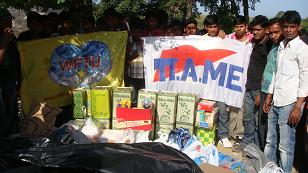
The immigrants’ death incidents in our country are a daily routine. In their attempt to cross the borders, without the necessary legal documents, they die, either because of sea drowning, or because of all the sufferings and the abuse taking place in detentions areas.
24 immigrants drowned in July, the 1st, between the greek-turkish borders. A few days ago, a 26-year-old Pakistani was found hung in the toilette of the police department, where he was detained. He was arrested, because he didn’t have all the necessary legal documents to support his residence in our country.
In a similar case, a 20-year-old immigrant from the Ivory Coast committed suicide in another police department, where he was detained until to be sent to his country.
The detention conditions, as well as the prisons’ infrastructure are despicable. There is no respect for human dignity or for the prisoners’ rights.
We demand that the government satisfy the requests presented below:
-To put an end to the unacceptable detention of immigrants, without legal documents, in prisons, in police departments, in harbormaster offices etc.
-To generally abolish the measure of administrative detention of immigrants and refugees, who lack legal documents, to close down the Detention Centres, in other words, the modern concentration camps, and to create humane, healthy and decent temporary hosting places for immigrants and refugees.
-To organize state special care programs for underage refugees and immigrants, mothers and children, who are human trafficking victims.
-To offer quickly and with reliable procedures asylum or temporary humanitarian regime to refugees or to those who come from countries where are under imperial occupation or civil wars.
-To provide travel documents to all those who want to go to another state-member of the EU, declaring disobedience to the Schengen agreement and to the Regulation “Dublin 2”.
-To legalize all the immigrants, who live and work in Greece, especially those, who have obtained vital bonds to the country so that they will have full labor, social security and democratic rights.
-To stop the new repression measures against immigrants at borders and to have Frontex out of Greece.
The Immigrants’ Secretary of PAME is going to have a protest demonstration at the Public Order Ministry.
It is going to inform the WFTU so that it will organize the unions’ struggle for immigrants’ rights, as well as the struggle against the causes that force millions of people to become immigrants and refugees.
Αγίας Φιλοθέης 5β
Τηλ.: 210 3301842,210 3301847,210 3833786
email: [email protected]